
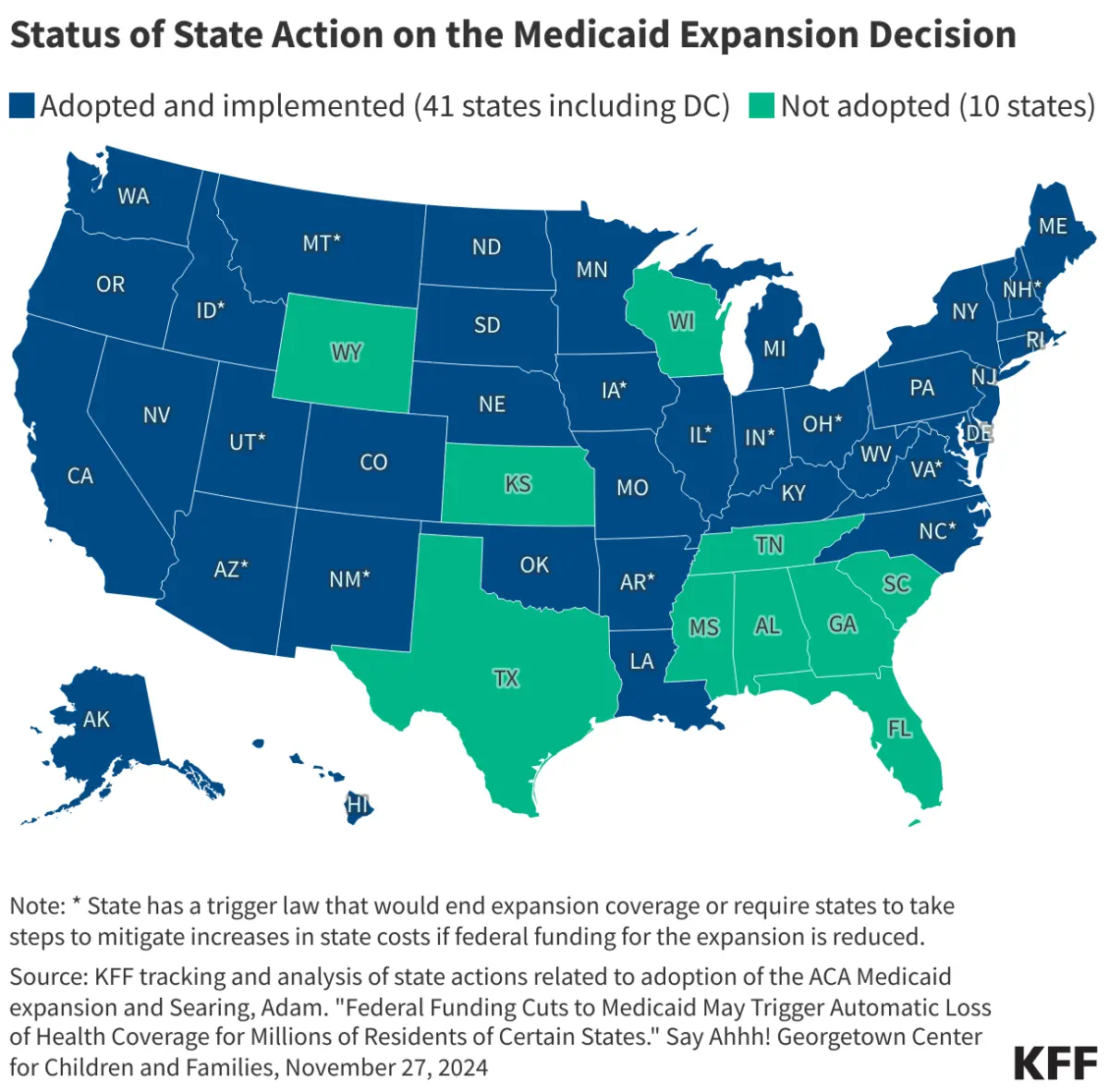
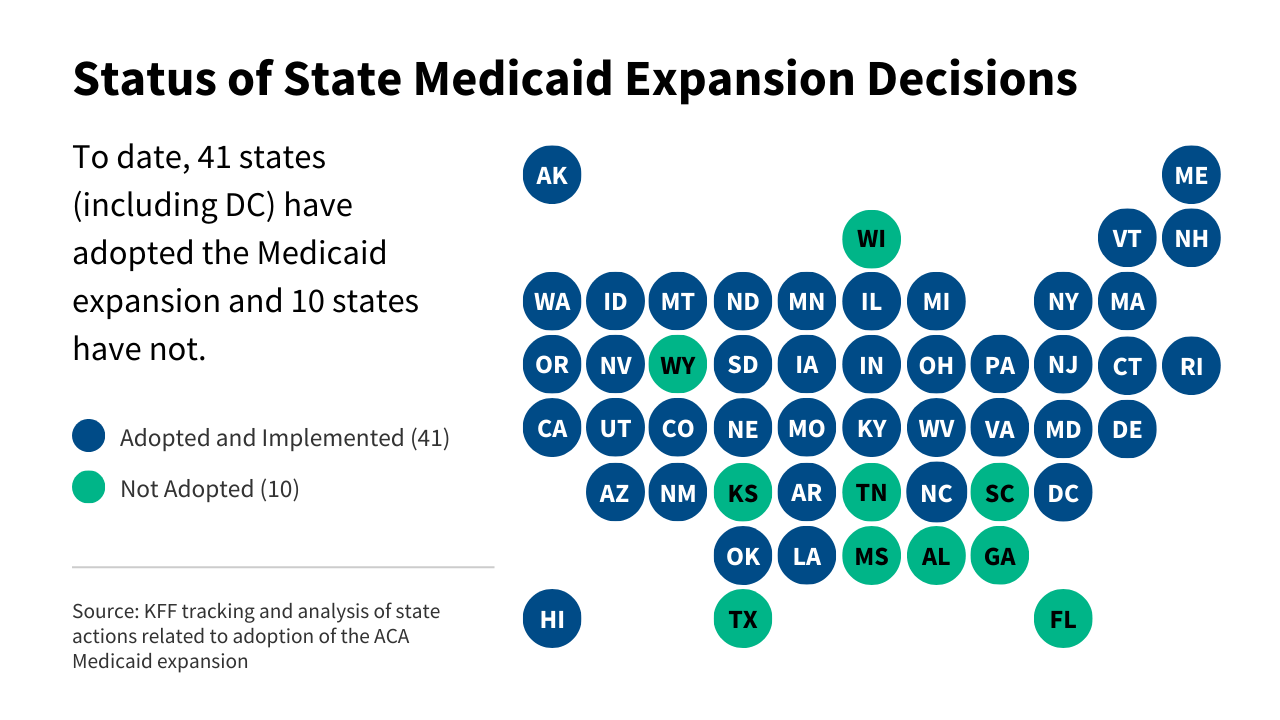
More than a decade after the landmark passage of the Affordable Care Act (ACA), the national landscape of healthcare coverage continues to evolve as states navigate the complex intersection of federal policy, state budgets, and public health needs. At the center of this ongoing debate is the ACA’s Medicaid expansion, a critical mechanism designed to broaden healthcare access for millions of low-income Americans. According to the latest tracking and analysis by KFF, a leading healthcare policy organization, a total of 41 states, including the District of Columbia, have officially adopted the Medicaid expansion, while 10 states have chosen not to move forward with it.
The ACA’s Medicaid expansion fundamentally reshaped the nation’s safety-net healthcare system by extending eligibility to nearly all adults with household incomes up to 138 percent of the Federal Poverty Level. For an individual, this income threshold translates to $21,597 based on the 2025 federal poverty guidelines. To incentivize states to broaden their safety nets, the federal government provided an enhanced federal matching rate, known as the FMAP, covering a significant majority of the costs associated with the newly eligible expansion populations. This financial arrangement was structured to make expanding coverage economically viable for state governments, many of which faced mounting uncompensated care costs in hospital emergency rooms prior to the law’s implementation.
Despite the substantial federal financial support, the decision to expand Medicaid has remained a deeply polarized political and fiscal issue across the United States. While the vast majority of states have embraced the policy over the years, the remaining holdout states continue to weigh the ongoing ideological, political, and budgetary implications of joining the program. KFF’s comprehensive state tracking offers a detailed look at the current status of each state, capturing the dynamic policy debates, legislative maneuvers, executive actions, and voter-led initiatives unfolding across the country.
Current state actions regarding the ACA Medicaid expansion involve a diverse array of political mechanisms. In states that have not yet adopted the expansion, policymakers and advocates continue to engage in active debates. These discussions often manifest through legislative actions, such as the introduction and passage of bills in at least one legislative chamber or committee, as well as executive actions, including governors’ budget proposals, executive orders, or significant policy announcements. Additionally, in several jurisdictions, residents and advocacy groups have turned to voter-led actions, pushing forward with progress toward ballot initiatives to bypass resistant legislatures and put the question of expansion directly to the electorate.
In some non-expansion states, policymakers have occasionally explored limited coverage expansions. However, policy experts note that these targeted initiatives typically do not qualify as full ACA Medicaid expansions and, consequently, do not qualify for the enhanced federal matching funds that have made the broader program so financially attractive to participating states. These alternative approaches highlight the ongoing tension between comprehensive reform and more restrictive, piecemeal coverage strategies.
Conversely, the landscape within states that have already adopted the expansion is also shifting. In several expansion states, recent policy discussions have centered on efforts to place new limits or administrative requirements on the expansion population. A primary vehicle for these changes has been through Section 1115 demonstration waivers, which allow states to test new approaches in Medicaid that deviate from federal program rules. These waiver requests often introduce work requirements, premium payments, or other administrative hurdles that proponents argue promote personal responsibility, but which critics contend create barriers to coverage and increase administrative costs.
Adding a new layer of complexity to the national conversation are legislative debates surrounding "trigger" laws tied to the share of federal funding. These provisions are designed to automatically scale back or terminate a state’s Medicaid expansion if the federal government reduces its matching rate or alters the funding structure of the program. According to tracking data and analyses from organizations such as the Georgetown Center for Children and Families, these trigger mechanisms introduce a high degree of vulnerability for millions of low-income residents whose healthcare coverage could be abruptly jeopardized by federal budget decisions.
Recent legislative activity surrounding these trigger laws has varied significantly from state to state. In South Dakota and West Virginia, lawmakers have considered or implemented action to establish trigger laws that would automatically roll back expansion if federal funding levels shift downward. Meanwhile, other states have attempted to modify or dismantle existing provisions. In Virginia, for instance, a budget amendment was introduced aimed at removing the automatic termination of the expansion from the state’s trigger law. Rather than allowing an automatic cutoff of coverage, the proposed amendment would have required a legislative committee to develop recommendations on how the state could adjust to any potential loss of federal funding. However, this amendment was ultimately not included in the final state budget.
Similar efforts to scale back or entirely remove trigger laws have emerged in other parts of the country as well. Proposals targeting these automatic termination clauses have been introduced in states such as Illinois and North Carolina, reflecting a growing awareness among some lawmakers of the precarious nature of relying on federal funding formulas that could be altered by future federal legislation or administrative changes. These legislative battles underscore the delicate balance states must maintain between protecting vulnerable populations and managing long-term fiscal liabilities.
The data tracking these state-level decisions, policy shifts, and legislative debates are made publicly available by KFF through comprehensive analytical reports and detailed state indicator tables. Furthermore, the geographic distribution of expansion and non-expansion states is visually represented through choropleth maps, which provide an accessible overview of nationwide trends. These mapping resources are frequently utilized by researchers, journalists, policymakers, and healthcare advocates to monitor the shifting contours of American health policy.
As states continue to grapple with healthcare costs, federal funding debates, and the evolving needs of low-income residents, the future of the remaining non-expansion states and the stability of existing programs will remain a central focus of the nation’s healthcare policy discourse. The ongoing actions in state capitals—ranging from legislative committee hearings and budget negotiations to ballot box initiatives and waiver requests—demonstrate that the implementation and evolution of the Affordable Care Act remain as dynamic and consequential today as they were when the legislation was first enacted.











No comments yet. Be the first to join the conversation!