
Editorial Note: This comprehensive briefing was updated on October 23, 2026, to incorporate the latest polling data from KFF, expanding on original findings published in December 2021.
For many years, extensive public opinion research conducted by KFF has documented how the towering cost of health care serves as a persistent burden on families across the United States. These financial pressures consistently factor into critical life decisions, including whether individuals choose to maintain insurance coverage, schedule routine preventative care, or seek treatment for emerging symptoms. As economic conditions fluctuate, medical expenses continue to rank as the single greatest financial worry for adults and their households, overshadowing many other household budgeting concerns.
Recent KFF polling data captures the public’s ongoing struggles with medical affordability, illustrating a widespread phenomenon that transcends partisan lines, insurance types, and socioeconomic brackets. While lower-income and uninsured individuals naturally bear the brunt of these financial challenges, the data shows that insured adults and middle-income families are increasingly feeling the squeeze of high out-of-pocket medical expenses, prescription drug prices, and long-term care costs.
Worries and Difficulty Affording Medical Costs
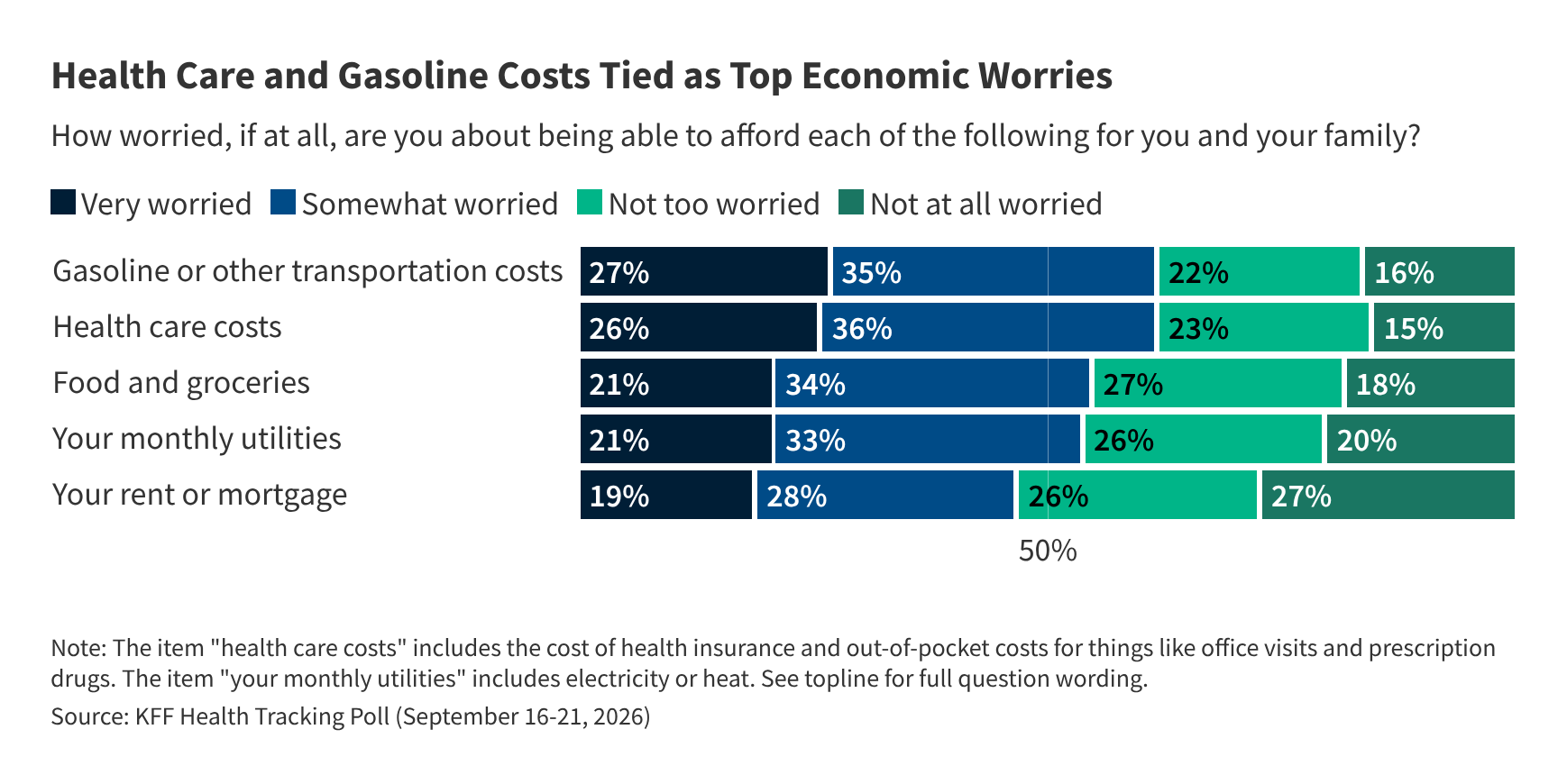
Throughout 2026, health care costs have remained locked at or near the very top of the nation’s financial anxieties. In the critical window leading up to the 2026 midterm elections, approximately six in ten U.S. adults report feeling either "very" worried (26%) or "somewhat" worried (36%) about their ability to afford health care costs for themselves and their families. This broad category encompasses everything from monthly health insurance premiums to out-of-pocket expenses for routine doctor office visits and necessary prescription drugs.
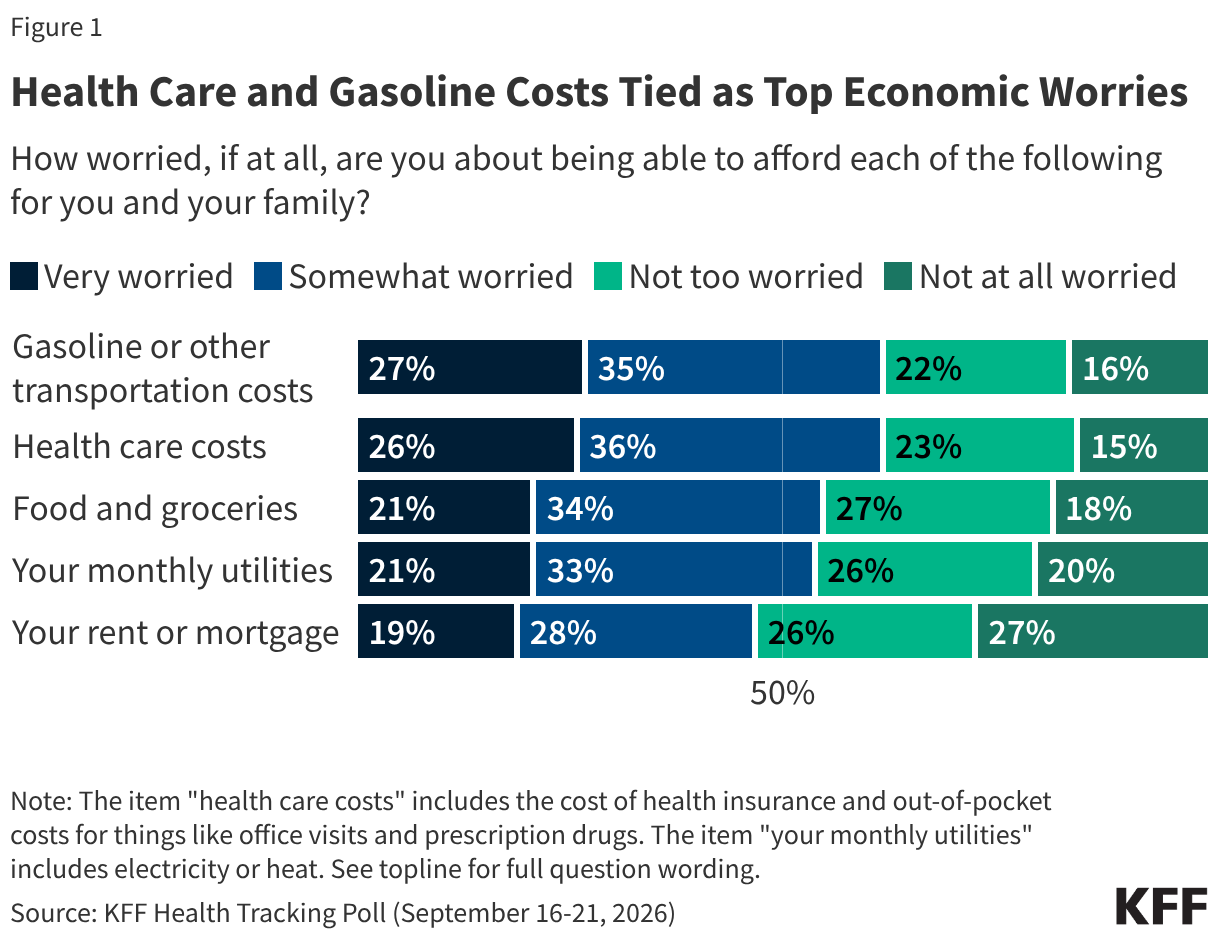
To put this economic anxiety into perspective, health care worries rival or exceed concerns over other essential living expenses. A comparable share of adults express deep worry about affording gas and transportation costs (27%), while smaller proportions report being "very" worried about managing other household necessities such as monthly utilities (21%), food and groceries (21%), or rent and mortgage payments (19%).
The burden of this worry is particularly acute among the uninsured. Roughly eight in ten (82%) uninsured adults under the age of 65 report being either very or somewhat worried about affording health care. However, having insurance is far from a complete shield against anxiety; a striking 63% of insured adults under 65 share these exact same concerns. Health care expenses emerge as a top household worry regardless of an individual’s specific insurance arrangement or political affiliation.
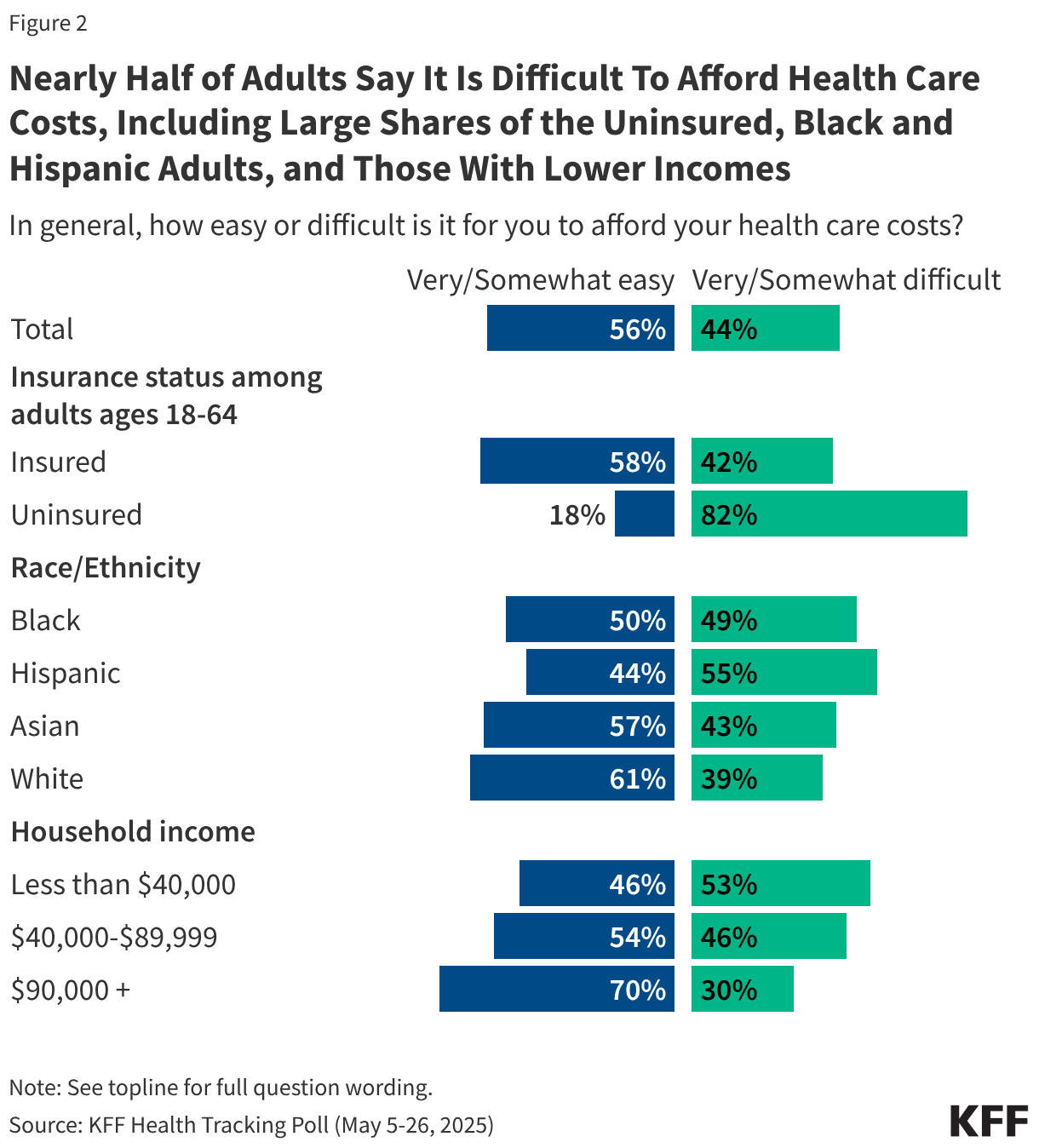
Echoing these pervasive worries, a substantial portion of the U.S. population finds medical costs genuinely difficult to pay. Just under half of all U.S. adults—some 44%—state that affording their health care costs is either very or somewhat difficult. While uninsured adults under 65 are overwhelmingly likely to report these affordability hurdles at 82%, a significant 42% of those with active health insurance coverage report the same struggles.
Demographic disparities further highlight where these burdens fall heaviest. A slight majority of Hispanic adults (55%) and half of Black adults (49%) report facing difficulties affording health care costs, compared to approximately four in ten White adults (39%). Furthermore, households with annual incomes under $40,000 are notably more likely to struggle with medical affordability than households situated in higher income brackets.
Delayed Care and Compounding Health Consequences
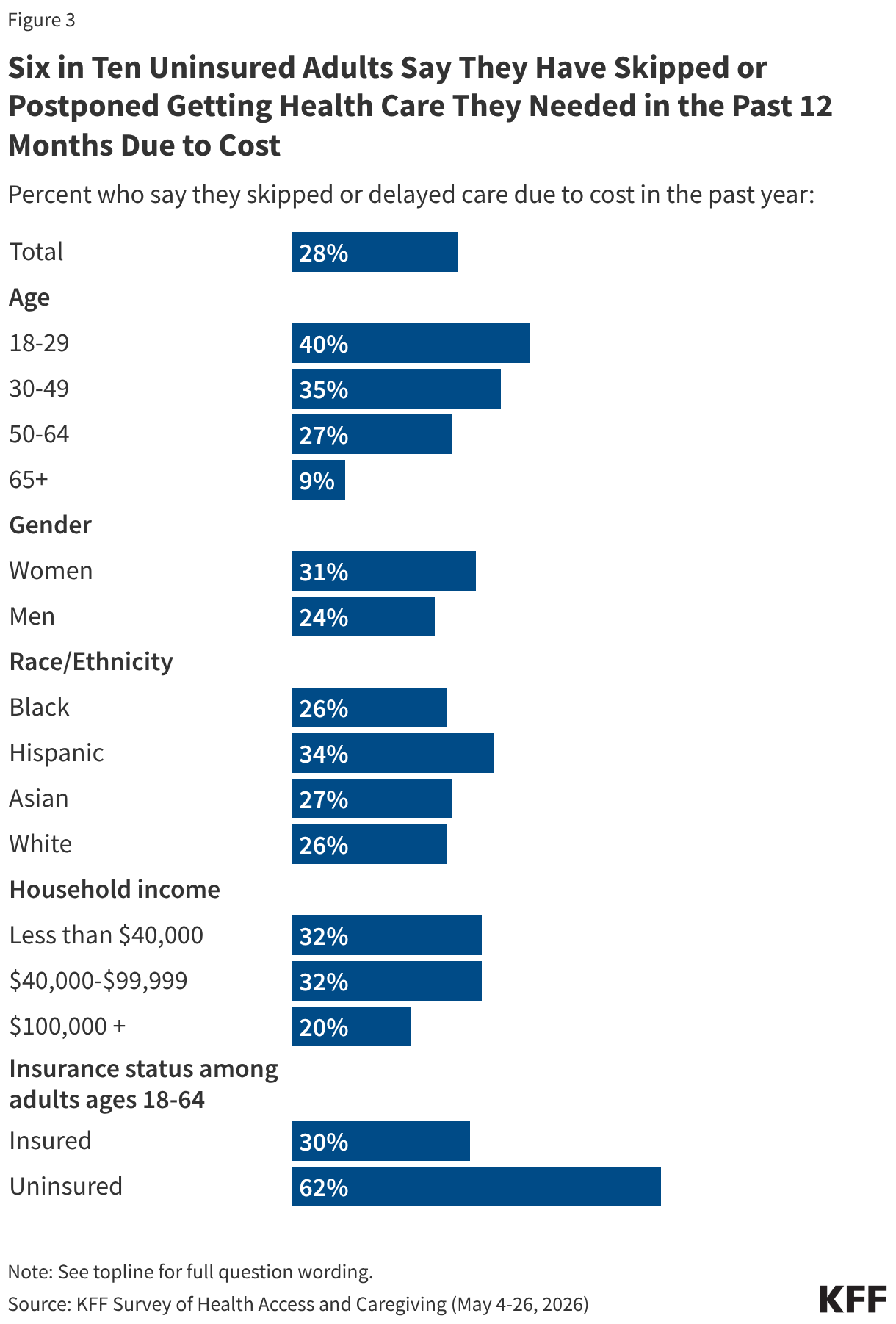
When medical costs become too difficult to manage, the immediate reaction for many Americans is to forego necessary medical attention. Roughly three in ten adults (28%) report that they have skipped or postponed getting needed health care over the past 12 months solely because of the associated costs.
This behavior is not evenly distributed across the population. Women, younger adults, Hispanic individuals, and those living on lower household incomes are consistently more likely than their respective counterparts to report skipping or postponing care due to financial barriers. The situation is starkest among the uninsured, where roughly six in ten (62%) report delaying necessary medical services due to cost. Yet, even among insured adults aged 18 to 64, three in ten still state that they went without required care because they could not afford it.
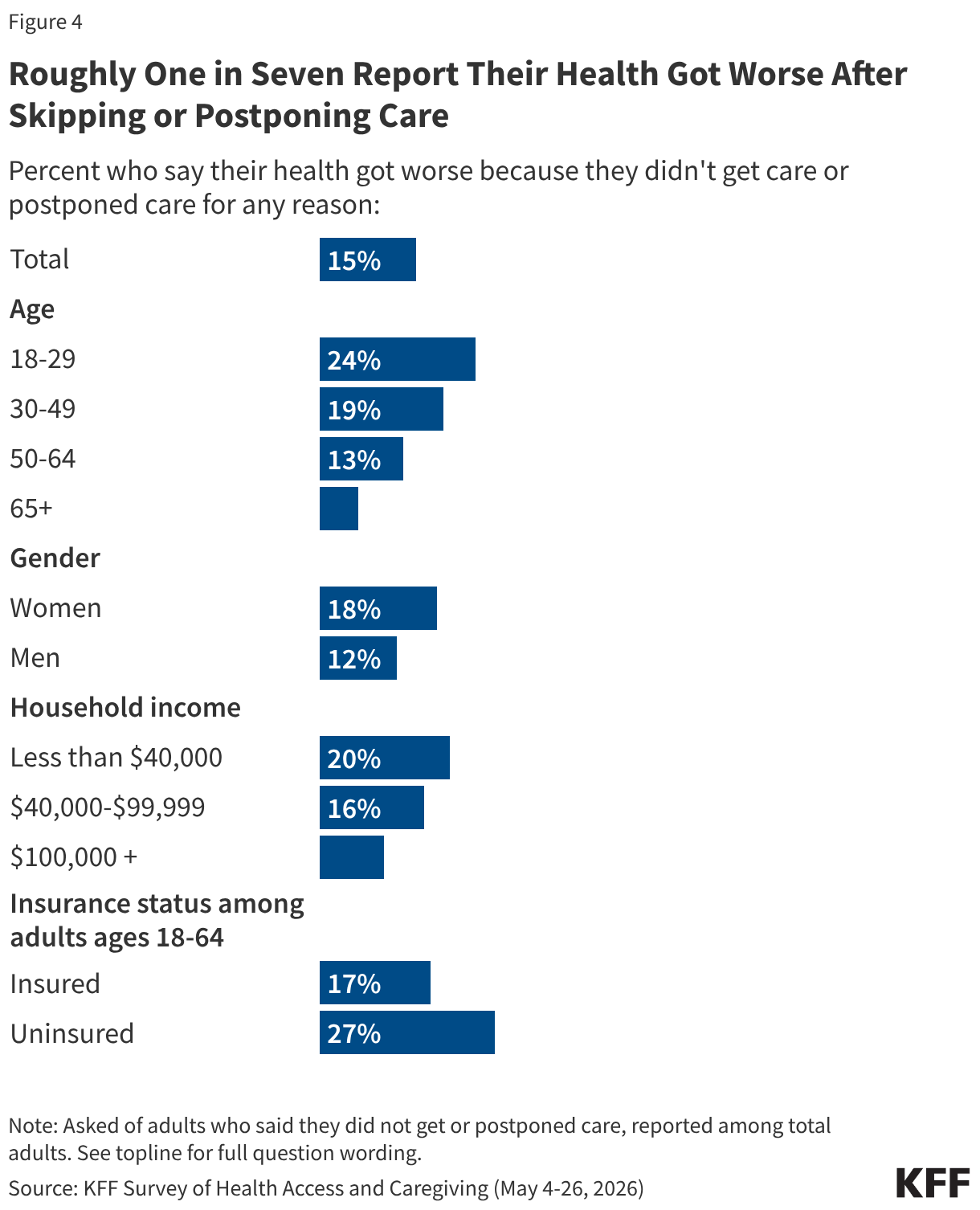
Postponing medical care for any reason carries tangible and often severe consequences for a person’s physical well-being. Roughly one in seven adults (15%) report that their overall health actually deteriorated because they skipped or delayed getting care. Among adults under age 65, the uninsured are significantly more likely than the insured to suffer a decline in health as a result of delayed care, at 27% compared to 17%. Age also plays a decisive role: adults under 30 are four times as likely (24%) to report that their health worsened after skipping care compared to adults aged 65 and older (6%), the vast majority of whom benefit from Medicare coverage.
Problems Paying Medical Bills and Household Trade-offs
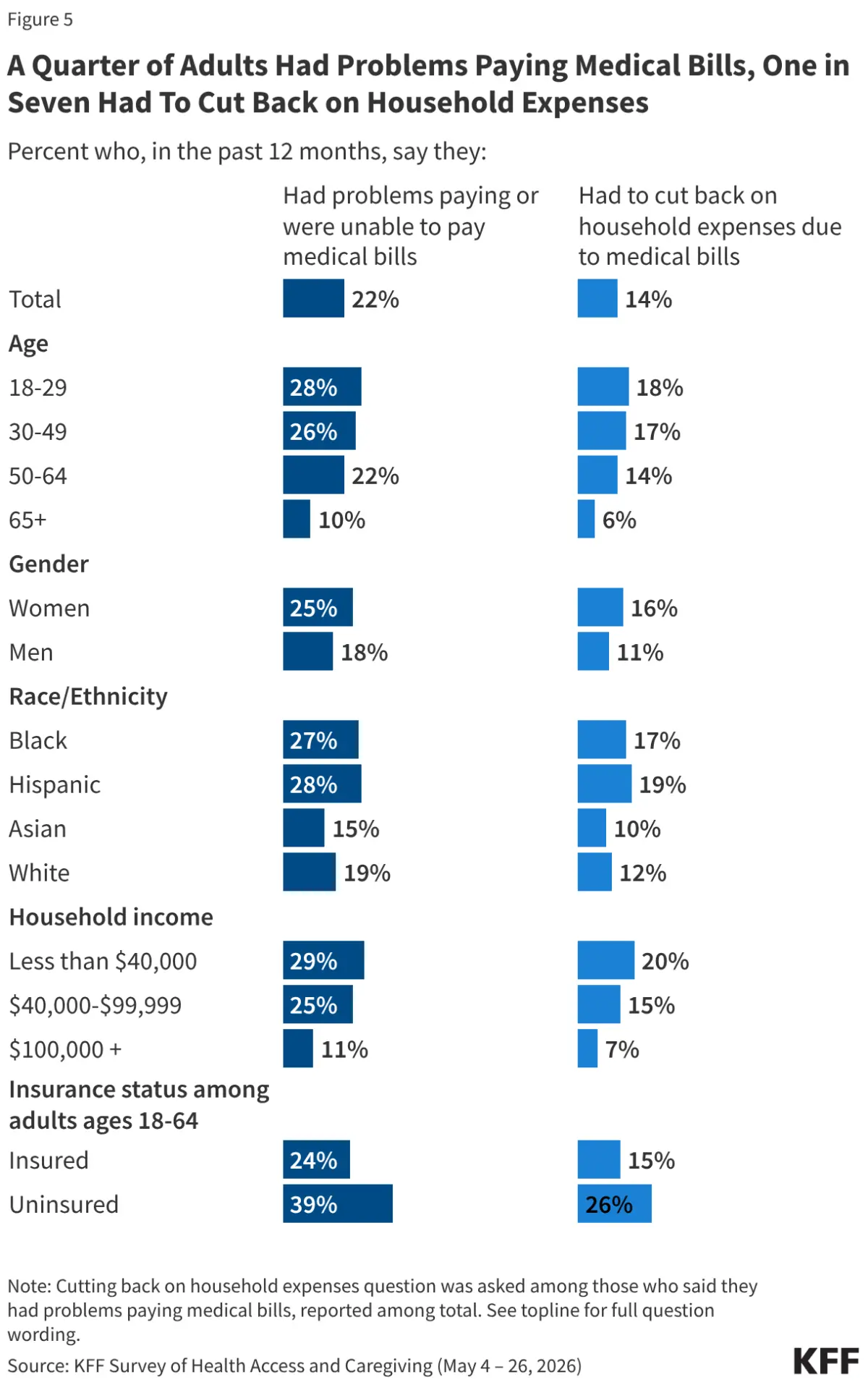
Beyond the anxiety of prospective medical expenses, actual debt and billing complications plague millions of households. About one in five adults overall (22%) report experiencing problems paying or being entirely unable to pay medical bills over the past 12 months. These include bills originating from primary care physicians, specialized medical tests, laboratory work, or pharmaceutical medications. Younger adults, women, Hispanic and Black adults, lower-income earners, and uninsured adults under 65 report these billing crises at higher rates than others.
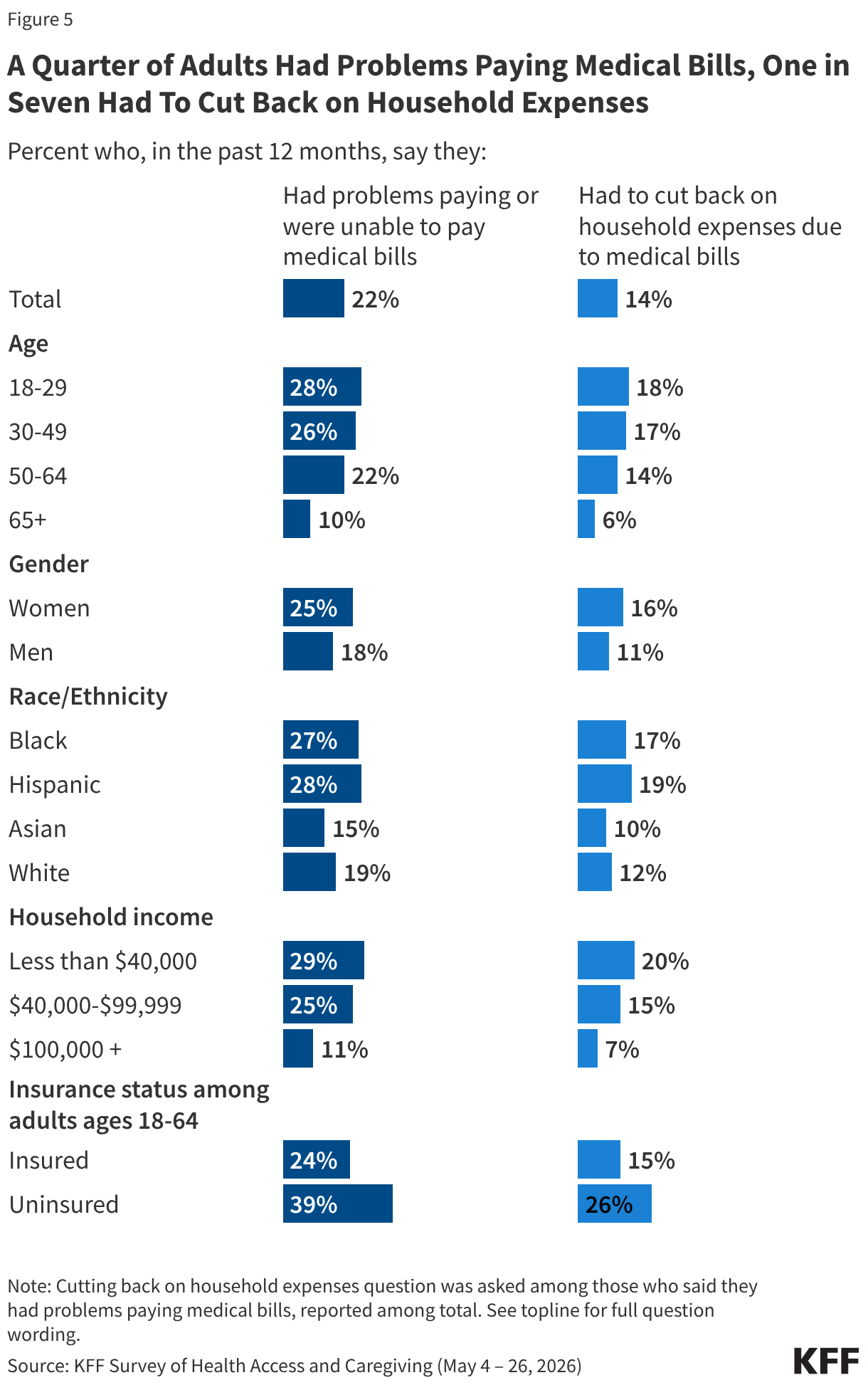
The friction of paying medical bills frequently triggers cascading financial consequences. One in seven adults (14%) report that they have had to cut back on fundamental household expenses—such as food, clothing, or other basic necessities—to allocate funds toward health care costs. This painful trade-off is particularly common among lower-income households, where 20% of those earning less than $40,000 annually must make these cuts, and among uninsured adults under 65, where the share rises to 26%.
Disproportionate Impacts on LGBTQ+ Adults and Chronic Patients
Polling data consistently demonstrates that certain vulnerable populations face exponentially higher hurdles regarding health care affordability and access. LGBTQ+ adults, who statistically tend to be younger and possess lower average incomes than their non-LGBTQ+ counterparts, report outsized challenges. According to KFF surveys, more than four in ten (43%) LGBTQ+ adults skipped or delayed care in the past year due to cost, compared to roughly a quarter (26%) of non-LGBTQ+ adults.
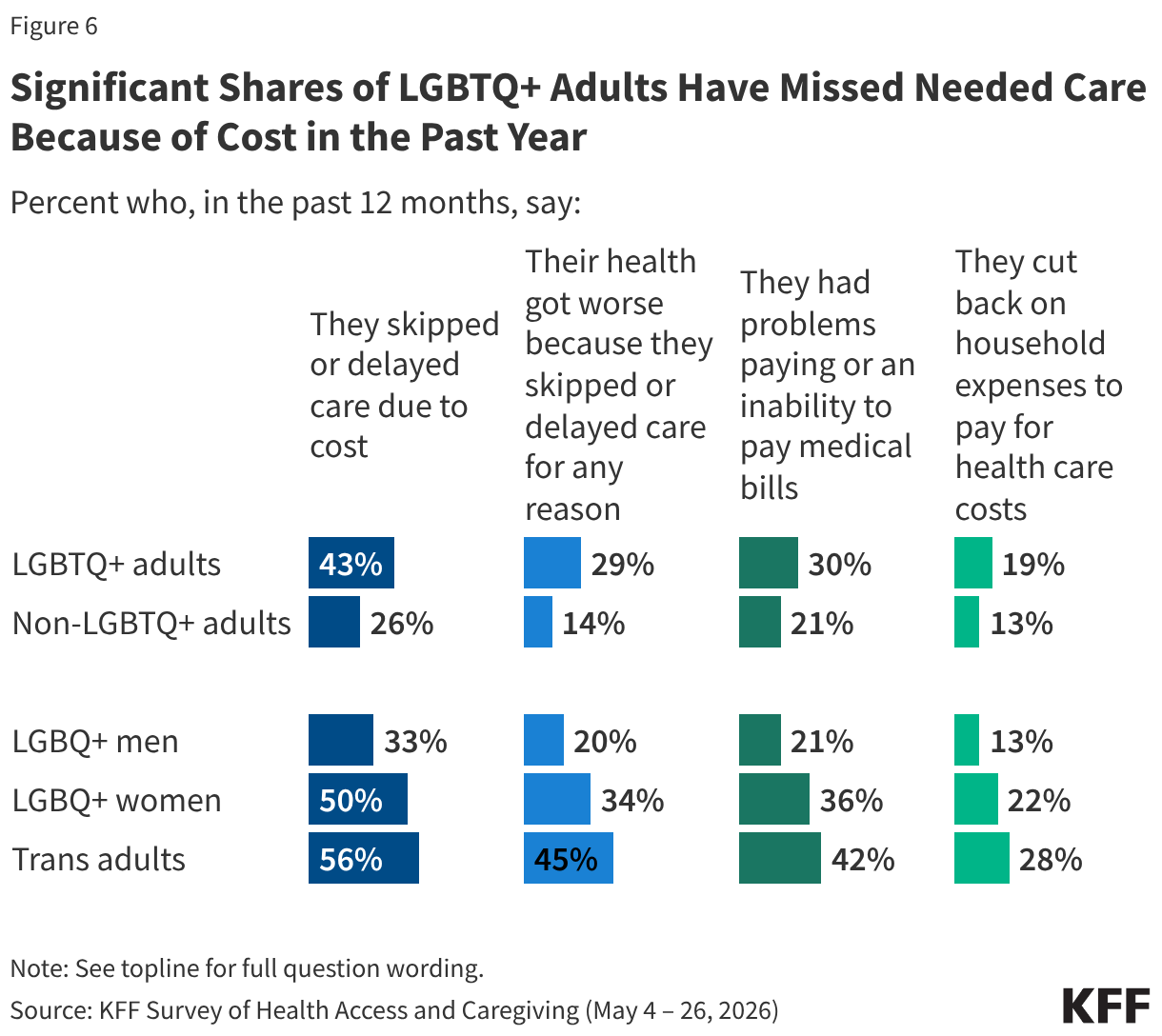
Additionally, three in ten LGBTQ+ adults report grappling with unpaid or unpayable medical bills over the past year, with nearly two in ten (19%) forced to cut back on basic household necessities to cover medical expenses. Transgender adults experience these barriers at even higher rates, with over half (56%) reporting delayed or skipped care due to cost, and nearly half (45%) stating that their health worsened as a direct result.
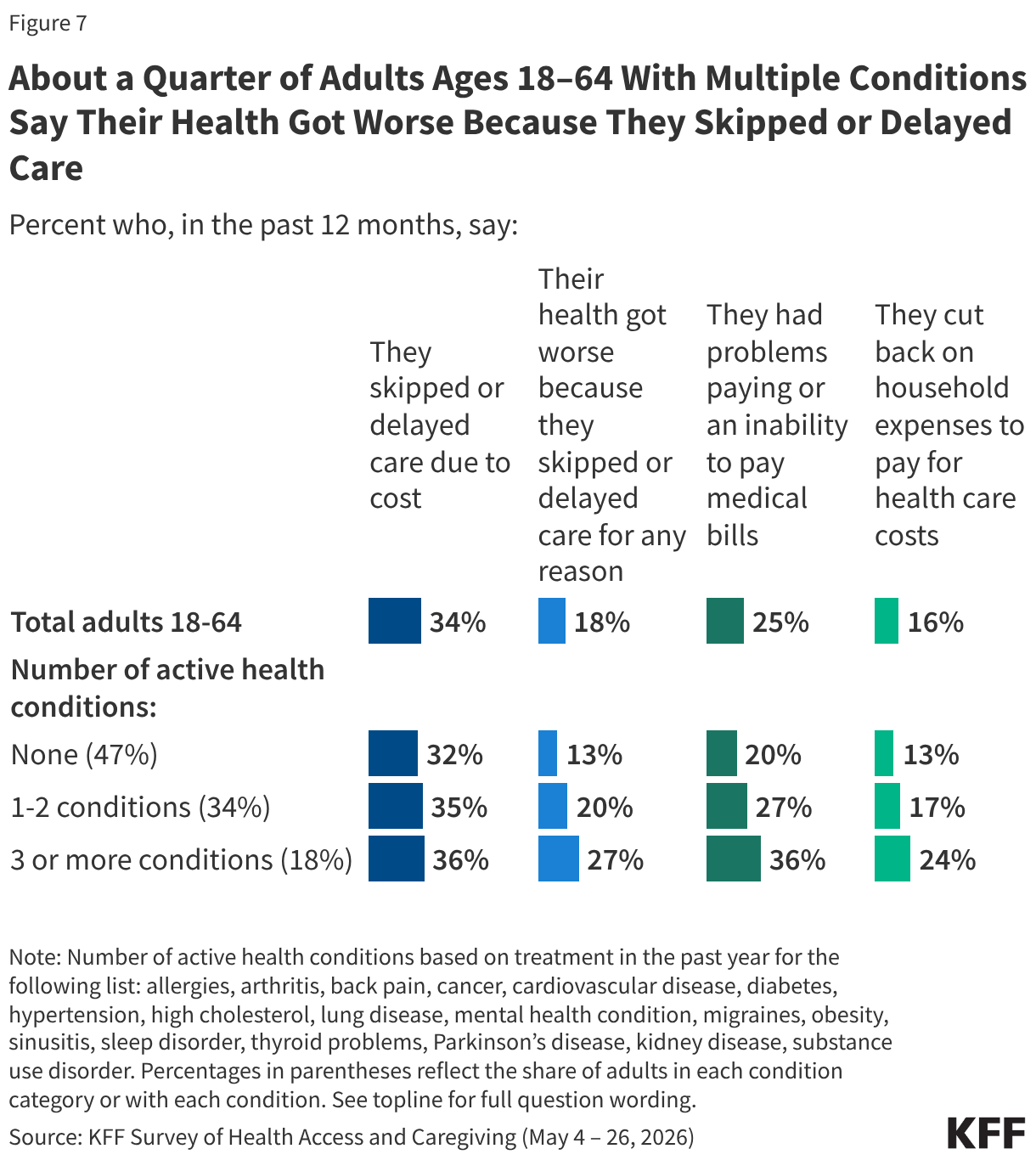
Individuals managing multiple or complex chronic health conditions face similarly disproportionate burdens. Among non-elderly adults managing three or more active health conditions, about one-third (36%) report going without needed care in the past year due to cost, and 27% state their health deteriorated because they skipped or delayed treatment. Furthermore, 36% of this chronically ill group report problems paying medical bills, and 24% have had to cut back on basic household goods to manage their medical bills.
Prescription Drug Costs and Coping Mechanisms
The high price of prescription drugs forces many patients to alter how they take their medications, introducing significant clinical risks. Approximately three in ten adults (31%) report that over the past 12 months, they took an over-the-counter drug instead of filling a prescription because of cost concerns. About a quarter (27%) report leaving a prescription unfilled entirely, and roughly one in five (19%) admit to cutting pills in half or skipping doses to stretch their supply.
Altogether, 43% of U.S. adults report utilizing at least one of these cost-saving measures over the past year, continuing a steady upward trajectory from 33% in 2025 and 31% in July 2023. Lower- and middle-income households resort to these medication-rationing strategies at much higher rates than wealthy households. About half of adults in households earning under $40,000 (52%) or between $40,000 and $90,000 (47%) report altering their medication use due to cost, compared to three in ten adults in households earning $90,000 or more.
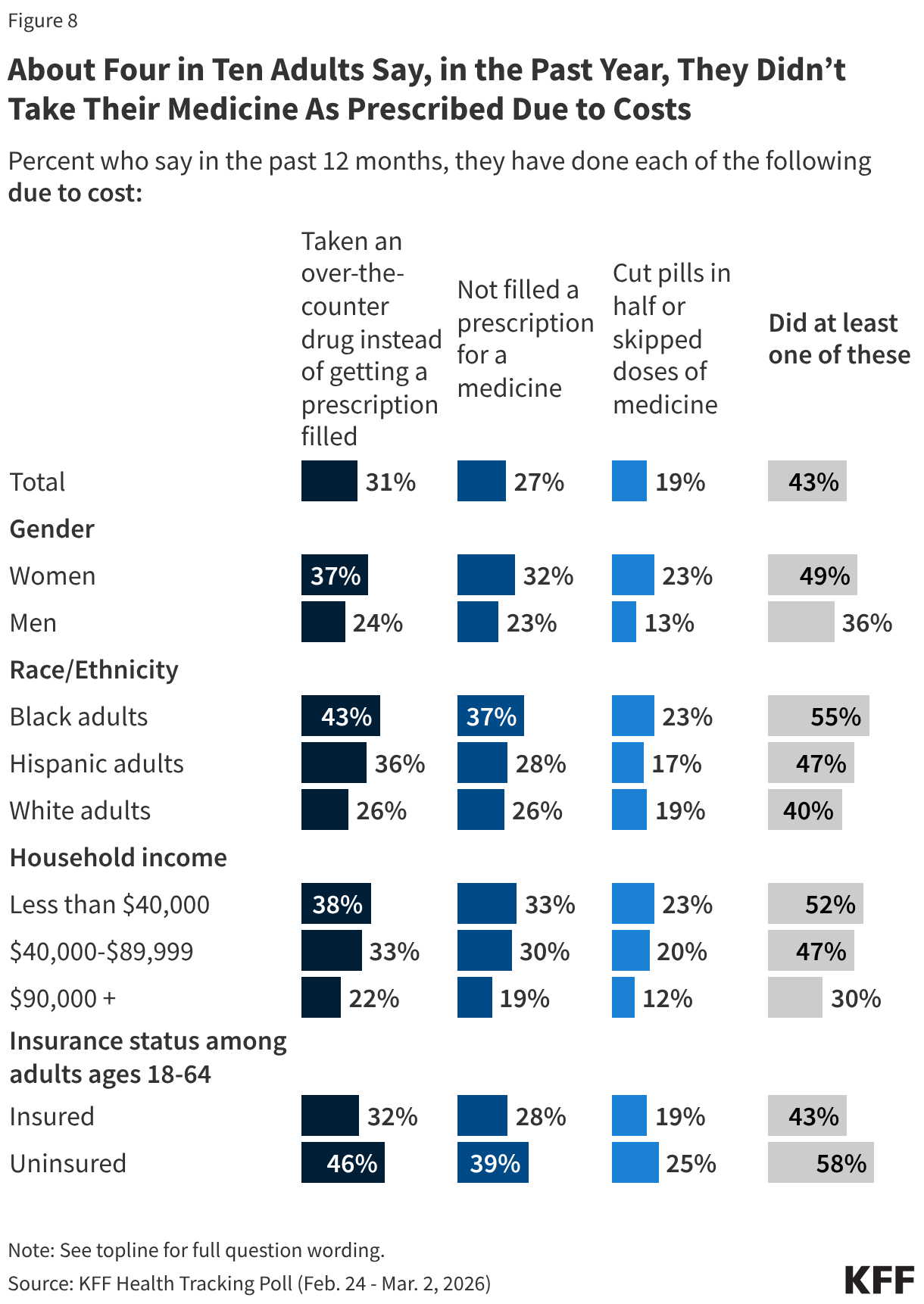
Uninsured adults under 65 are also far more likely to compromise on their prescriptions compared to insured peers, at 58% versus 43%. Demographic trends show that women are more likely than men to adopt these measures (49% to 36%), while Black (55%) and Hispanic (47%) adults report altering their medication use at higher rates than White adults (40%).
Health Insurance Cost Ratings and Consumer Perceptions
While health insurance provides a vital buffer against total financial ruin, the structure of modern premiums and out-of-pocket cost-sharing leaves many policyholders dissatisfied. Overall, most insured adults rate their health insurance favorably as "excellent" or "good" regarding prescription out-of-pocket costs (61%), doctor visit costs (53%), and monthly premiums (54%). However, at least three in ten policyholders evaluate their coverage as merely "fair" or "poor" across these same metrics, with ratings varying sharply by insurance type.
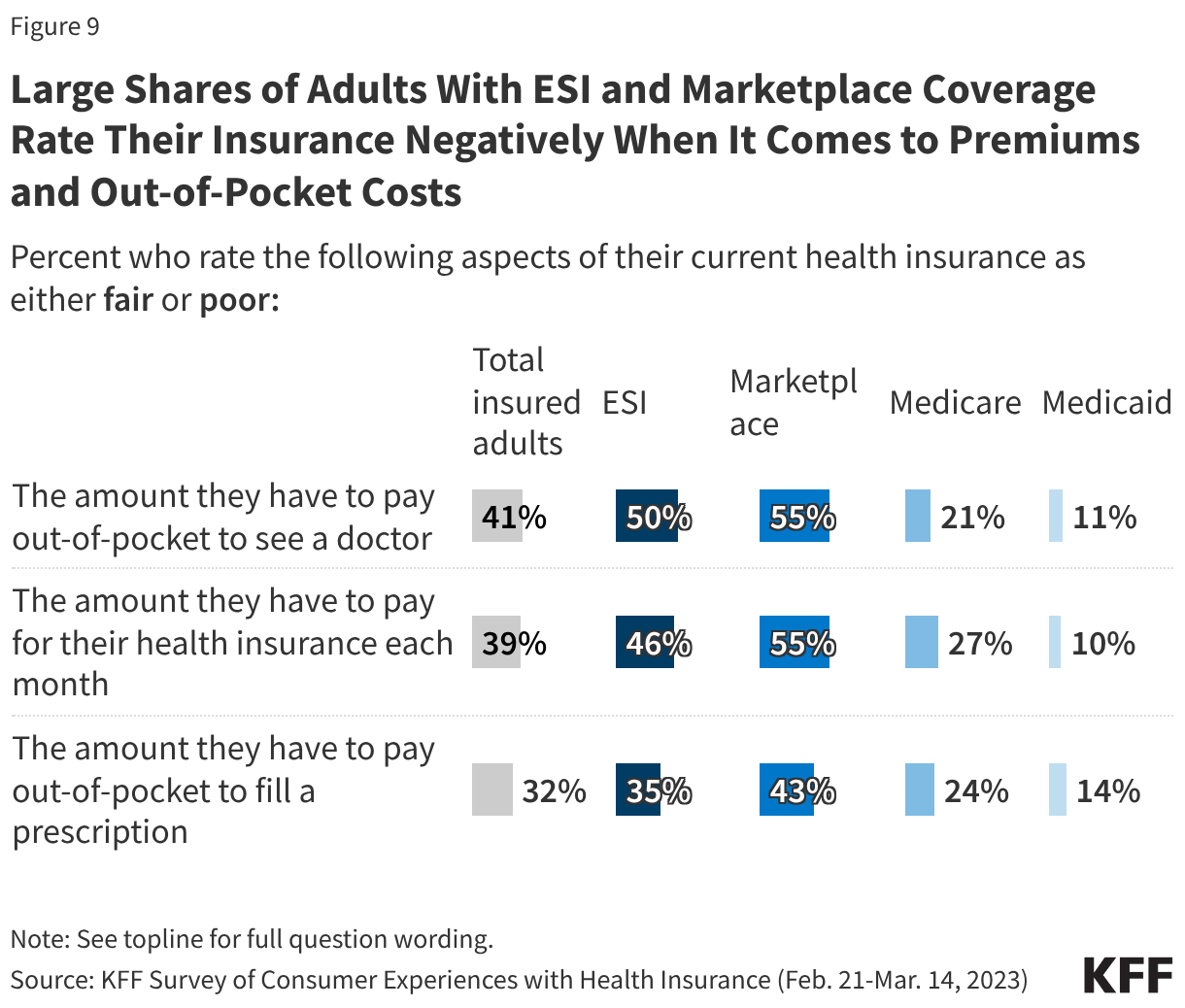
Privately insured individuals—whether through employer-sponsored plans or state and federal Marketplaces—tend to give their coverage more negative reviews concerning monthly premiums, doctor visit copays, and prescription costs compared to those enrolled in Medicare or Medicaid. Roughly one in four Medicare beneficiaries give negative marks to their monthly premium and prescription out-of-pocket costs. Meanwhile, Medicaid enrollees are generally less likely to give negative ratings on these affordability measures, largely because most states do not charge monthly premiums for Medicaid and keep nominal copays restricted.
Long-Term Health Care Debt and Future Anxieties
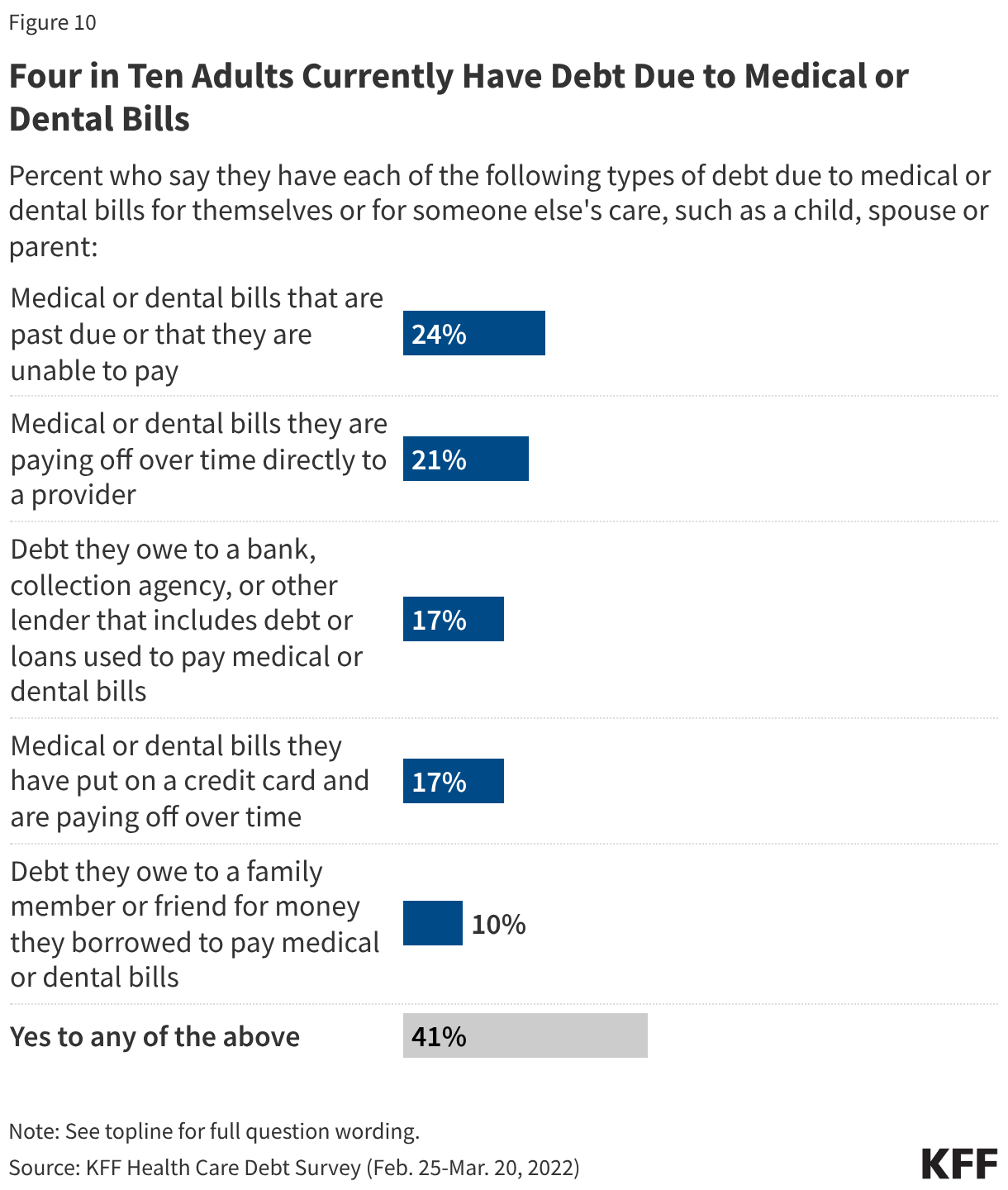
The cumulative impact of medical expenses frequently translates into long-term debt. Research from KFF’s comprehensive health care debt studies indicates that 41% of U.S. adults currently carry some form of debt resulting from medical or dental bills for themselves or someone in their care. This includes roughly a quarter of adults (24%) with past-due or unpayable bills, one in five (21%) paying off bills over time directly to providers, and roughly one in six carrying debt owed to banks, collection agencies, credit cards, or family members.
This widespread indebtedness leaves many households highly vulnerable to unexpected health events. Approximately half of all U.S. adults state they would be unable to comfortably pay an unexpected $500 medical bill out of pocket. This includes 19% who could not pay it at all, 5% who would need to borrow money from external lenders or family, and 21% who would be forced to incur new credit card debt. Women, lower-income earners, and Black and Hispanic adults are disproportionately represented among those vulnerable to immediate financial distress from minor medical emergencies.
Among older adults and those nearing retirement age, the conversation around health care costs extends heavily into long-term care. Nearly six in ten adults aged 65 and older (57%) express anxiety about affording a nursing home or assisted living facility if the need arose, while half worry about paying for in-home support services like paid nurses or aides. These concerns are even more pronounced among adults aged 50 to 64, where more than seven in ten report feeling anxious about affording residential care (73%) and professional home care services (72%) in their later years.







No comments yet. Be the first to join the conversation!