
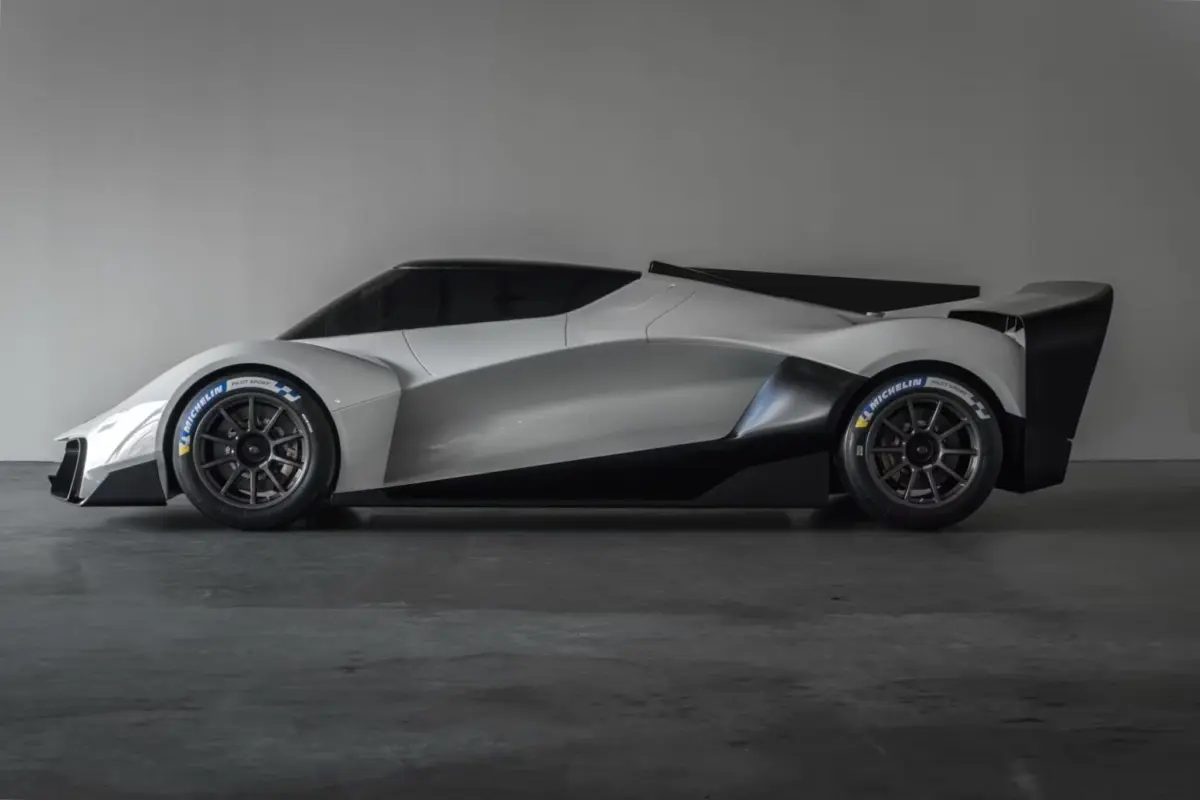
It is an age-old question for automotive and motorcycle enthusiasts alike: which offers the superior, most visceral experience—driving a genuinely fast, high-performance car or riding a powerful motorcycle? While the debate has raged on for generations among petrolheads, hypercar startup Sanrivatti has decided to bypass the choice entirely with a refreshing, radical philosophy. Much like the child from the classic internet meme who asks why we cannot simply have both, Sanrivatti has developed a machine that aims to merge the best of both worlds. Initially introduced to the public as a conceptual sketch with remarkably few technical details, the project has now evolved into a tangible prototype. This working prototype finally reveals how Sanrivatti plans to achieve its ambitious goal: marrying the aggressive, exposed riding position and dynamic body-shifting of a motorcycle with the safety, layout, and heavy-duty engineering of an enclosed, high-performance track car.

The vehicle, simply and starkly named the One, looks radically different from virtually anything else currently populating the hypercar landscape. Much of this distinct visual identity stems from its unique head-forward packaging and spatial layout. The carbon-fiber bodywork is meticulously sculpted, incorporating massive air channels around the vehicle’s waistline in a manner reminiscent of the iconic Ford GT. However, the wraparound glass of the cockpit leans much closer to the aesthetic of a futuristic spacecraft than a traditional earth-bound automobile. Looking at its silhouette and stance, the One evokes memories of the playable, high-speed racing vehicles from classic sci-fi video games of the 16-bit era, specifically resembling something that might have effortlessly drifted around the digital tracks of the pre-Mario Kart Super Nintendo racing game, F-Zero. Yes, this single-seat hypercar rests firmly on four wheels, but it is otherwise a breathtaking departure from what a traditional track-day special is expected to look like.
As expected from a machine with these performance ambitions, the Sanrivatti One is strictly a track-only endeavor. Given its innovative "Apex Position," which creates a hybrid seating and riding posture halfway between a conventional sports car and a superbike, engineers faced unique ergonomic challenges. The car requires a complex, highly specialized restraint system to secure the pilot safely while still allowing them the freedom of movement necessary to shift their weight. Because the driver sits more like a rider, terminology becomes wonderfully fluid: is this person a driver, a rider, or perhaps a pilot? Regardless of the title, the projected specifications for the machine are remarkably potent. Sanrivatti estimates that the vehicle will feature a high-revving internal combustion engine capable of producing a staggering 800 horsepower. Paired with this immense power output is a claimed curb weight of just 2,425 pounds, resulting in a phenomenal power-to-weight ratio. Top speed for the track-only machine is estimated to comfortably exceed 200 miles per hour.

To achieve this level of performance, Sanrivatti turned to trusted industry heavyweights for its mechanical components. The roaring power will come from Judd, a renowned U.K.-based racing specialist with a rich, decades-long heritage spanning Formula 1, IndyCar, and the grueling endurance tests of Le Mans. The engine chosen for the One is a naturally aspirated 5.5-liter V-10, an architectural choice that promises a spine-tingling acoustic profile alongside linear power delivery. To harness this immense output and transfer it to the tarmac, the startup selected a racing-specification Hewland six-speed sequential gearbox, ensuring lightning-fast gear changes under heavy loads. Stopping power is equally serious, courtesy of high-performance braking components supplied by AP Racing. The entire assembly rides on custom forged magnesium wheels manufactured by Braid, which are wrapped in sticky, racing-grade Michelin Pilot Sport tires designed to extract every ounce of available mechanical grip from the track surface.
Merging the sensory experience of a Suzuki GSX-R superbikes with the stable, high-downforce envelope of an Audi R8-style supercar sounds undeniably invigorating on paper, but actually operating the Sanrivatti One will require a complete rewiring of a driver’s mental reflexes. The vehicle retains conventional foot pedals to manage braking and acceleration, and it features a traditional steering wheel. However, the physical interaction with that steering apparatus is entirely flipped: drivers will be pressing rearward for directional controls, fundamentally altering the tactile feedback loop between man and machine. Furthermore, the pilot is encouraged to physically lean their body into corners—much like a motorcycle rider shifting their weight off the saddle—while still maintaining a firm grasp on the steering wheel.

This unconventional approach is bound to feel remarkably like flight, encapsulating both the exhilarating highs and the mildly terrifying moments associated with piloting high-speed aircraft. Sanrivatti is leaning heavily into this uniquely challenging experience. The company suggests that mastering the art of driving the One will not merely be a byproduct of ownership, but rather the defining characteristic that sets it apart from every other hypercar currently flooding the ultra-exclusive market. In an era where hypercar manufacturers constantly chase bragging rights through traditional metrics, Sanrivatti is charting a different course. The company is largely sidestepping the usual obsessive focus on zero-to-60-mph acceleration times, Nürburgring lap records, and other figures typically dictated by a stopwatch. Instead, the ultimate measure of the Sanrivatti One will not be found in a spreadsheet of cold numbers, but in the raw, unfiltered human experience of its pilot. If the startup’s engineers have executed their vision correctly, the One simply will not compare to anything else on earth.








No comments yet. Be the first to join the conversation!