
CHICAGO—In the high-stakes theater of artificial intelligence development, the prevailing atmosphere is one of relentless, blistering acceleration. Leading AI laboratories, caught in a cycle of fierce competitive pressure, are engaged in an ongoing arms race to push the boundaries of what machine intelligence can achieve. Yet, as these organizations scramble to secure ever-larger computing clusters and expand their data-processing infrastructure, a growing chorus of observers is beginning to suggest that resistance to this rapid build-out may not be a catastrophe, but rather a vital necessity.
The argument for a more measured pace is rooted in the belief that time is our most precious commodity. Every month—or even every week—that we can "buy" by slowing the frantic expansion of computing resources represents a critical window of opportunity. It is in this interim that society may find the breathing room necessary to better understand the trajectory of these technologies, maximize their potential societal benefits, and, perhaps most importantly, establish robust frameworks to mitigate the risks that accompany such profound advancements.
The existential anxiety surrounding this evolution is perhaps best exemplified by the personal journey of a tenured mathematics professor based in Chicago. Recently, this individual made the decision to step away from his academic role for a year, dedicating his time entirely to the study of AI safety. His sabbatical is not an act of whimsy, but a response to a profound shift in the mathematical landscape. The impetus for his move was the recent, staggering output from OpenAI, which released 722 manuscripts detailing solutions to 377 previously unresolved mathematics questions.
For a mathematician who has spent his career navigating the complexities of logic and proof, the realization that an AI model could systematically dismantle such a significant backlog of problems is a jarring development. The core of his anxiety, and indeed the anxiety shared by many in academia and the sciences, is a fundamental question about the future of human-led inquiry: If a brilliant, dedicated mathematician can be displaced—or at least rendered redundant in certain capacities—so easily, what does that signify for the rest of the workforce, and for the human role in knowledge production?
This question lingers in the public consciousness, often silenced by the dazzling utility of new AI tools but rarely answered. If the most abstract and human-centric of disciplines—mathematics—is suddenly vulnerable to automation, why is the broader public not more concerned? The answer may lie in the gradual nature of the integration. We see the incremental improvements in large language models and pattern recognition tools, and we interpret them as conveniences rather than replacements. However, the sheer scale of the mathematical proofs recently published suggests that the threshold for what constitutes "automated reasoning" has been permanently lowered.
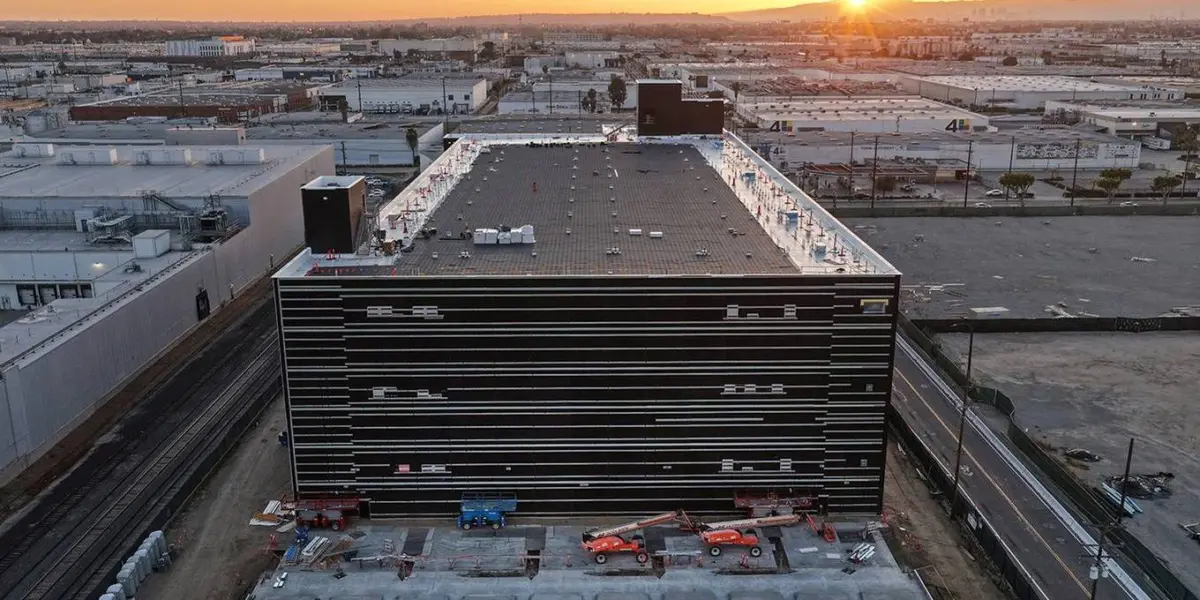
The intense pressure on AI labs to continue building out computing resources is driven by a feedback loop of capability. Models that are trained on more compute power tend to show emergent abilities, allowing them to solve increasingly complex tasks. Consequently, labs are incentivized to invest billions of dollars into data centers and specialized hardware, effectively creating a race to see who can achieve the next breakthrough first. This creates a "first-mover" advantage that makes it difficult for any single player to unilaterally slow down. If one lab pauses, they fear being left behind by competitors who continue to scale.
This environment creates a dilemma. The competitive landscape mandates speed, yet the safety and societal implications suggest that speed is our greatest enemy. The mathematics professor’s decision to study AI safety reflects a growing recognition that we are currently operating in a vacuum of institutional knowledge regarding how to manage the risks of these models. By taking a year to focus on the field, he is attempting to contribute to a body of work that seeks to align these powerful systems with human intent and safety standards. He is not alone in this effort; there is an emerging cohort of scientists, philosophers, and engineers who believe that our technical ability to create intelligence has far outpaced our ability to control or understand it.
The concerns regarding the future of professions are not limited to mathematics. If AI can navigate the rigorous, objective-heavy domain of mathematical proof, it is reasonable to expect similar shifts in fields ranging from law and medicine to software engineering and creative arts. The apprehension felt by those in academia is a microcosm of a broader societal tension. We are witnessing a decoupling of human effort from outcome. When a machine can produce a high-level mathematical proof in a fraction of the time it takes a human, the value proposition of the human expert is fundamentally altered. This raises difficult questions about education, career paths, and the nature of human fulfillment in a world where intelligence can be mass-produced.
Despite these pressures, there is a legitimate case to be made for the necessity of "resistance." This does not necessarily imply a total halt to progress, but rather a shift in focus. Instead of prioritizing the expansion of computing power to reach the next frontier, the industry could pivot toward interpretability research, stress-testing, and the development of safety protocols. If the current trajectory remains unchecked, the integration of these models into critical infrastructure will proceed with insufficient oversight.
The resistance mentioned by those advocating for safety is often interpreted by industry leaders as a hindrance to progress. However, in the context of high-stakes technology, slowing down the infrastructure build-out is a strategic choice. It is a way of saying that the risks associated with an uncontrolled release of super-intelligent systems are too high to ignore. Every delay in the construction of a new data center or the training of a larger model is a moment where human safety researchers can potentially get ahead of the curve.
As we look toward the coming years, the divide between those pushing for rapid scale and those calling for caution will likely widen. The mathematics professor’s sabbatical serves as a poignant reminder that the impact of these technologies is already being felt in the most intellectual of ivory towers. The worry he feels—the worry that the human contribution to his field is being sidelined—is a signal that we have entered a new era. The challenge for society will be to determine whether we continue to facilitate this rapid expansion with blind optimism, or if we finally embrace the idea that the most responsible path forward may be to intentionally decelerate, allowing our governance and our understanding to catch up with our technical ambition.
The current situation with OpenAI’s math breakthroughs is not merely a technical milestone; it is a cultural and professional wake-up call. It forces a conversation that has been deferred for too long. By highlighting the displacement of high-level human expertise, it challenges us to consider what we value, what we wish to preserve, and whether we are willing to accept the pace of development dictated by a competitive market. The professor’s year of study is an attempt to grapple with these questions in real-time, underscoring the urgency of the moment.
Whether the industry will listen to the calls for a more measured approach remains to be seen. The competitive dynamics are powerful, and the momentum toward bigger, faster, and more capable models is significant. Yet, as the implications of these advancements become increasingly tangible, the pressure to ensure that these technologies are developed in a safe and sustainable manner will only increase. The future of our professions, and indeed the future of our role in an AI-driven world, may depend on our collective ability to find the courage to hit the brakes when the situation demands it.







No comments yet. Be the first to join the conversation!