
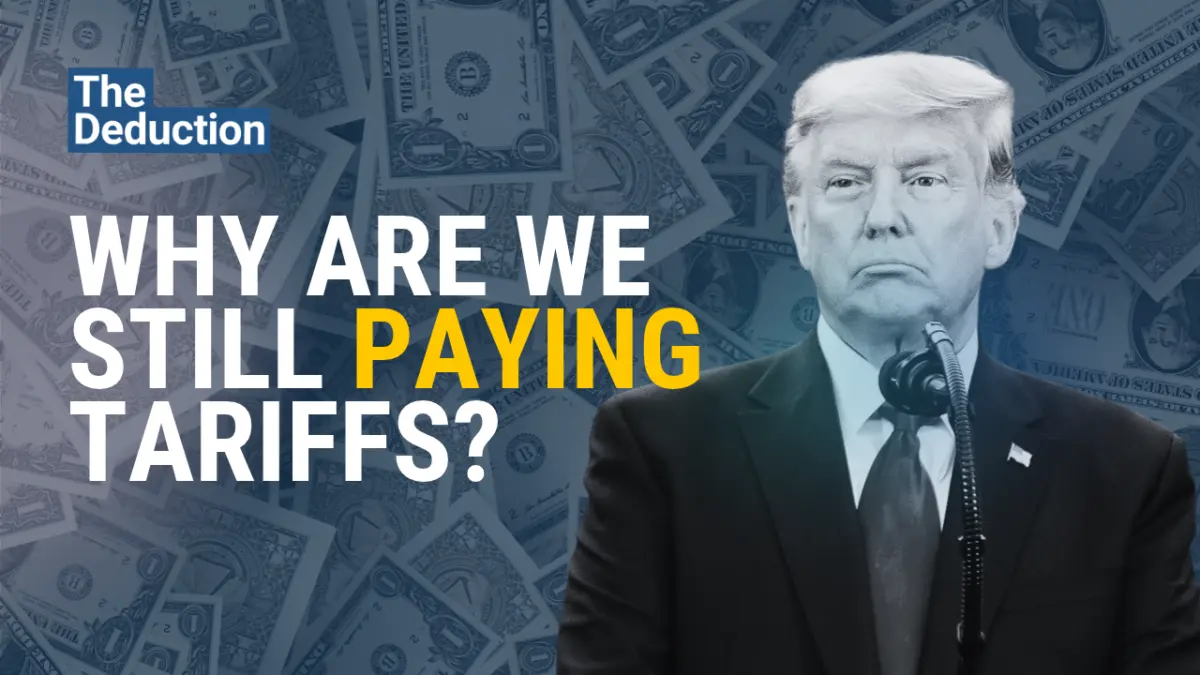
The legal landscape surrounding international trade and federal taxation has faced continuous disruption over recent months, leaving many observers and taxpayers wondering why import duties remain a fixture of the American economy. Following a landmark Supreme Court decision in February that struck down the International Emergency Economic Powers Act (IEEPA) tariffs, a natural expectation arose that businesses and consumers would experience immediate relief from these trade barriers. Instead, the administration swiftly pivoted, replacing the invalidated duties with a new suite of measures designed to maintain protectionist trade policies.
This dynamic forms the core of a recent episode of The Deduction, where policy analysts Kyle and Erica York sat down to catch up on the evolving realities of American tariff policy. Their discussion unpacks the complex legal maneuvering that followed the Supreme Court ruling, the transition from temporary Section 122 tariffs to sweeping Section 301 duties, and the broader economic ramifications these import taxes impose on domestic businesses and everyday consumers. Furthermore, the conversation highlights how these ongoing trade policies threaten to undermine crucial domestic tax provisions, particularly the investment incentives provided by full expensing, while examining the ongoing court battles that could ultimately determine the legal fate of the administration’s new tariffs.
The Aftermath of the Supreme Court IEEPA Decision
When the Supreme Court struck down the IEEPA tariffs in February, it represented a significant check on executive authority regarding the unilateral imposition of emergency import duties. For months, businesses navigating global supply chains had operated under the financial weight of these specific measures, which added significant costs to raw materials, intermediate goods, and finished products alike. The high court’s ruling was widely interpreted as a major victory for importers and consumer advocates who argued that the executive branch had overstepped its statutory authority under the decades-old emergency powers statute.
However, the relief anticipated by the business community proved to be short-lived. Rather than abandoning the broader objective of utilizing tariffs as a central tool of economic and foreign policy, the administration moved quickly to reassert similar protective measures through alternative statutory authorities. This rapid succession of policy shifts left supply chain managers, corporate tax strategists, and economic analysts scrambling to keep pace with an unpredictable regulatory environment where the legal foundation for import taxation shifts almost as quickly as the geopolitical landscape.
Navigating Section 122 and Section 301 Tariffs
To fill the immediate vacuum left by the invalidation of the IEEPA duties, the administration first turned to temporary Section 122 tariffs. These short-term measures served as a bridge, allowing the federal government to maintain trade pressure while developing a more permanent legal framework. Once the temporary window for Section 122 authorities closed, the administration transitioned to implementing comprehensive Section 301 tariffs, imposing duties ranging from 10 to 12.5 percent on nearly every trading partner of the United States.
Tariffs, by definition, function as taxes imposed by one government on goods imported from another country. Serving as explicit trade barriers, they inherently raise prices for domestic purchasers, reduce the available quantities of goods and services for United States businesses and consumers, and create a substantial economic burden on foreign exporters who must absorb the costs or pass them down the supply chain. By applying these broad Section 301 tariffs across virtually all international trade partners, the administration has ensured that the aggregate tax burden on imported goods remains exceptionally high, despite the judicial setback experienced earlier in the year.
During their discussion, Kyle and Erica York examine how these sweeping duties intersect with broader economic strategies. Of particular concern is the potential for these protective taxes to completely counteract the positive investment incentives fostered by other elements of the federal tax code. Specifically, the analysts explore how the financial drag imposed by continuous tariff rates may effectively cancel out the investment boost intended by full expensing provisions.
Full expensing allows businesses to immediately deduct the full cost of certain investments in new or improved technology, equipment, or buildings. This vital tax mechanism is designed to alleviate a longstanding structural bias in the tax code, incentivizing companies to commit capital toward productive assets. When businesses invest more, the long-run result is typically higher worker productivity, boosted wages, and the creation of more jobs. However, when firms face persistent uncertainty and elevated costs from broad import tariffs on capital goods, machinery, and industrial inputs, the financial incentive to expand and modernize operations can be severely blunted.
Ongoing Legal Challenges and the Future of Trade Policy
The policy discussion also turns to the judicial horizon, where several ongoing court cases could still successfully challenge and ultimately strike down the new wave of Section 301 tariffs. Just as the IEEPA duties were eventually dismantled through the federal court system, legal scholars and trade associations are actively testing the statutory limits of the administration’s current approach. These active legal battles mean that the future of American tariff policy remains inherently unstable, with judicial oversight continuing to serve as a primary check on executive trade actions.
For taxpayers, business leaders, and policymakers seeking to stay informed on the shifting tax policies impacting the national economy, ongoing analysis remains essential. Listeners can catch the full conversation between Kyle and Erica York by tuning into The Deduction across major podcast platforms, including Apple Podcasts, Google Podcasts, Spotify, Castbox, Stitcher, and Amazon Music, or by accessing the audio directly via the official RSS feed. Stay informed on the complex tax data, news, and economic analysis shaping the modern fiscal landscape by subscribing to available professional newsletters and policy updates.









No comments yet. Be the first to join the conversation!