
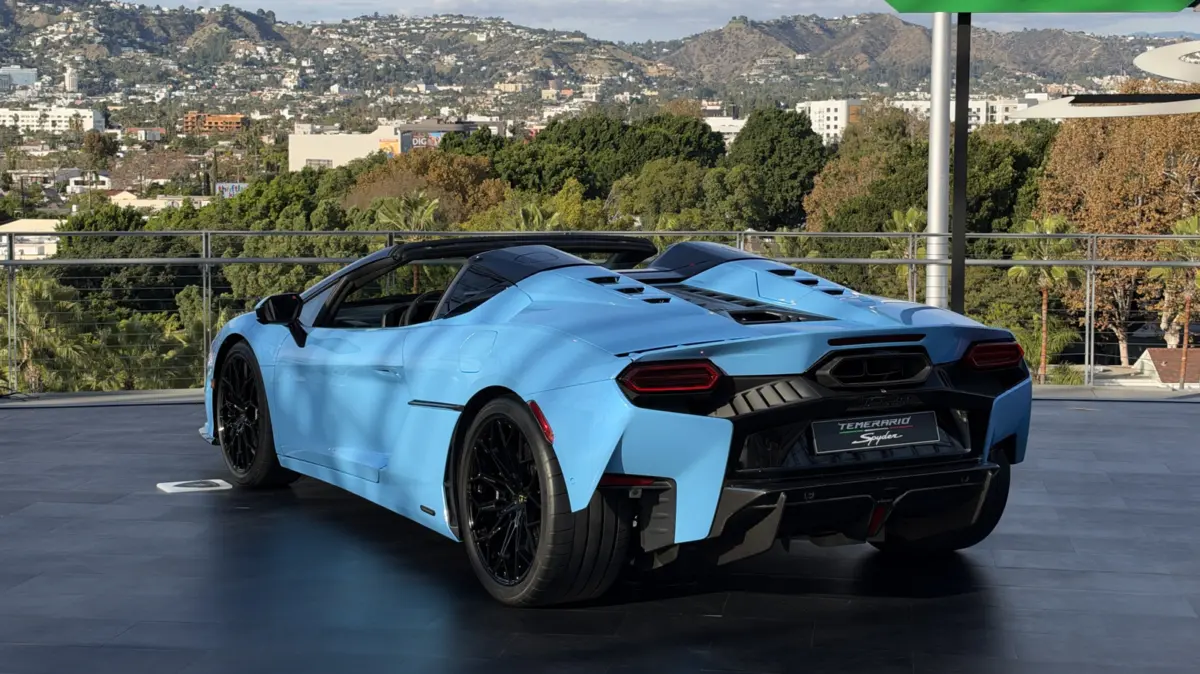
The Lamborghini Temerario has barely settled into the garages of early adopters, having only been in the hands of customers for about a year, yet the Italian automaker is already expanding the lineup with a variant destined to prompt immediate trade-in inquiries at dealerships worldwide. Making its official world debut at the prestigious Academy Museum of Motion Pictures, the Lamborghini Temerario Spyder brings open-air drama to the brand’s latest generation supercar. While Lamborghini has a rich history of crafting droptop mid-engine machines stretching all the way back to the Silhouette in 1976, the brand has ironically lagged behind contemporary industry trends in one specific area until now: the Temerario Spyder represents Lamborghini’s very first convertible equipped with a powered retractable hardtop.
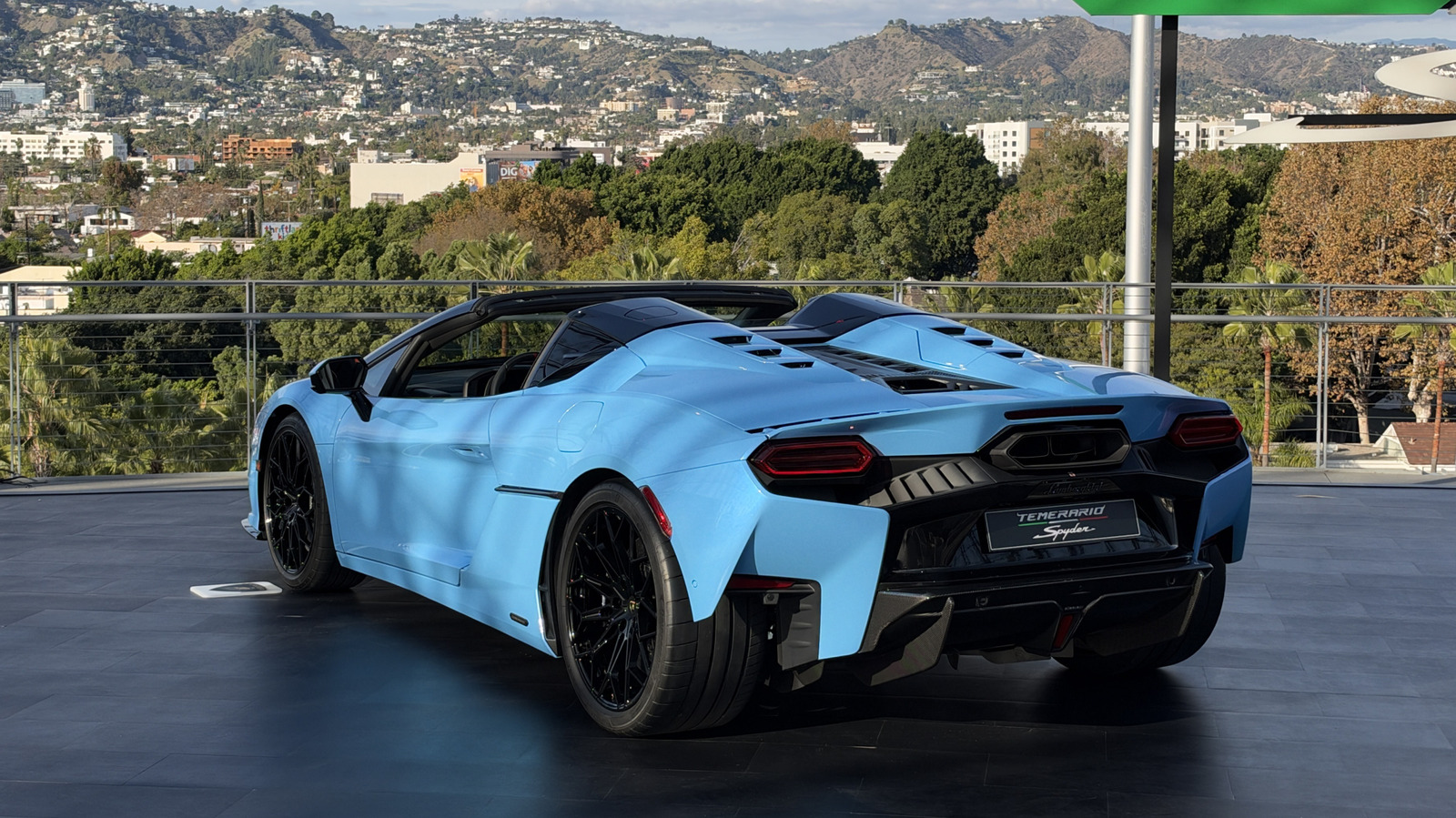
Despite adopting a roof mechanism style that has long since saturated the broader luxury automotive market, the new model arrives with an aura of raw excitement that feels thoroughly modern. According to the manufacturer, the sophisticated hardtop configuration was meticulously engineered to seamlessly combine everyday cabin comfort, uncompromised driving precision, and optimal aerodynamic efficiency. Furthermore, the folding mechanism itself is entirely unique to the automotive industry, continuing Lamborghini’s long-standing tradition of exuberant, head-turning engineering.
Look at That Roof!
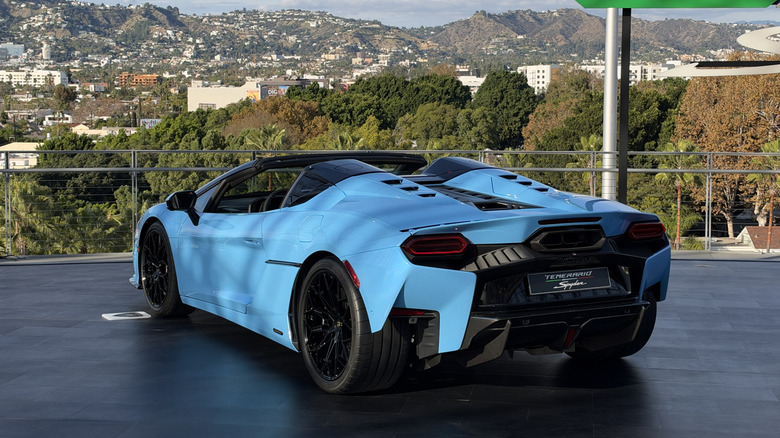
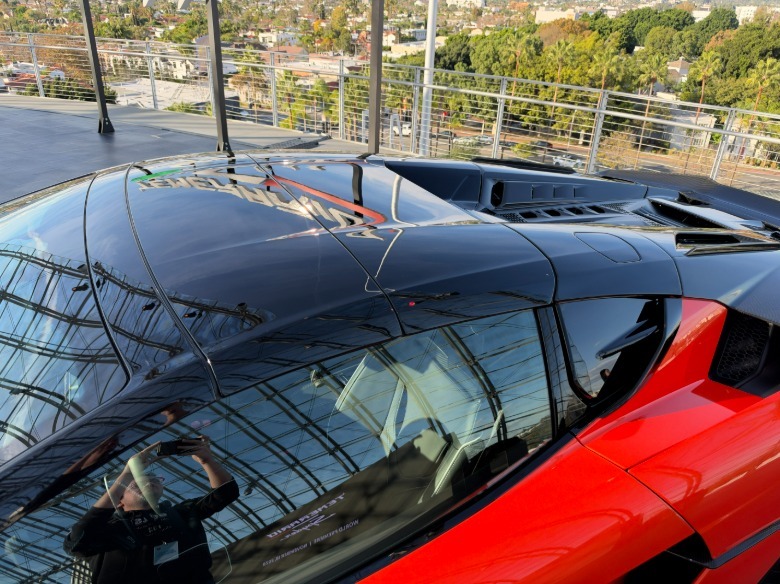
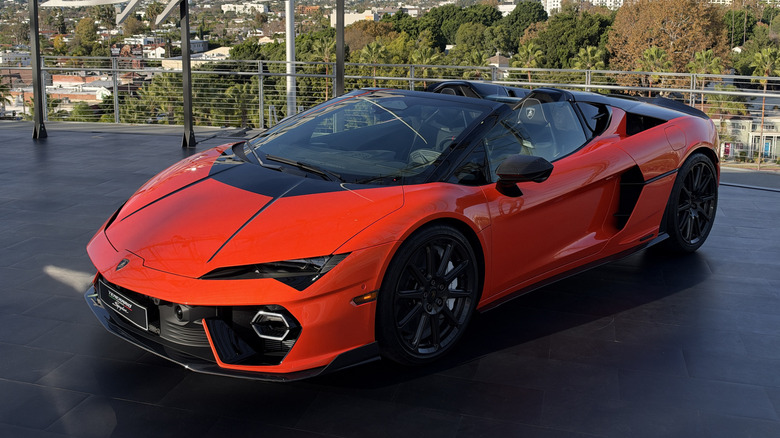
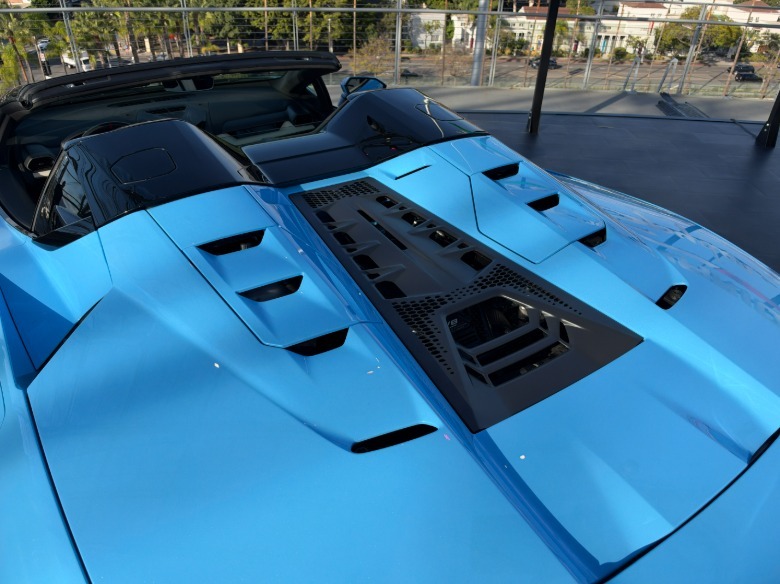
From a purely aesthetic standpoint, the Temerario Spyder retains the aggressive, low-slung proportions of its fixed-roof sibling, a reality that bodes exceptionally well for its visual appeal. The overall profile and sweeping roofline remain remarkably faithful to the coupe, particularly when the hardtop is deployed. Behind the passenger compartment, two prominent structural cowls rise gracefully from the rear decklid, each housing a striking trio of cooling vents. In place of the smaller side quarter windows found on the coupe, designers integrated a fresh intake element that feeds cooling air into the mechanical belly of the beast.
The redesigned engine cover puts the plug-in hybrid V8 powerplant proudly on display, framed by a complex array of functional intakes, aerodynamic vents, and aggressive styling elements designed to maximize visual drama. Buyers looking to further individualize their vehicle can opt for an entirely new livery option that introduces stark black exterior accents, including sharp framing around the LED headlights, offering an even deeper level of personalization than was initially made available for the coupe.
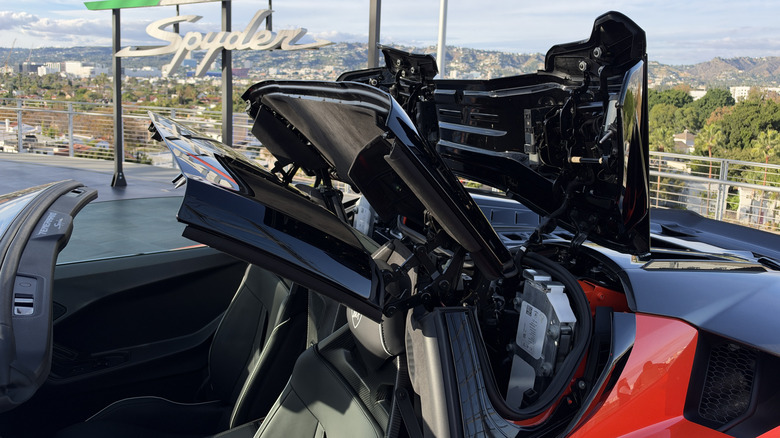
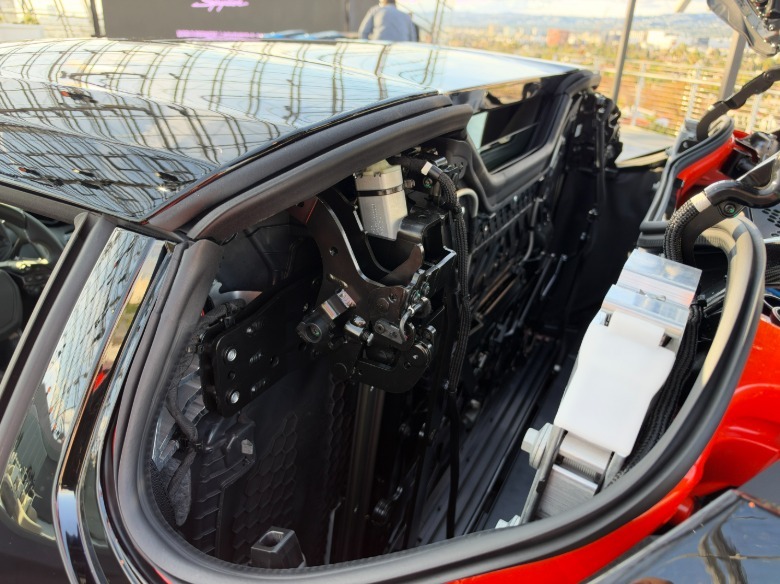
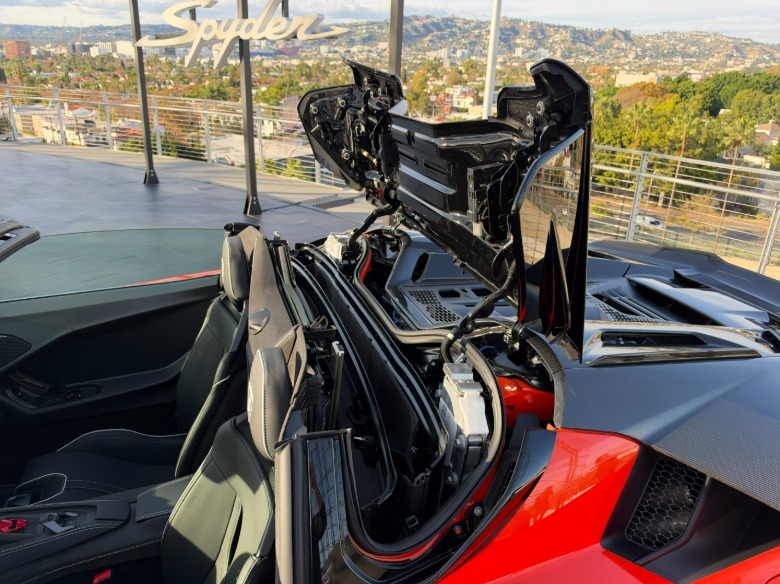
The undisputed technical centerpiece of the Spyder, however, is its patented roof operating mechanism. Diverging radically from traditional folding hardtops that typically sit flat across the rear deck when stowed, Lamborghini’s system splits the hardtop into two distinct panels that tuck away vertically directly behind the seats, positioning themselves just ahead of the engine bay. Rather than relying on conventional electro-hydraulic circuitry, the mechanism is powered by ten individual electric actuators. This innovative approach yields a mechanical action that is smoother, quieter, and significantly more compact in its packaging. Watching the complex choreography of the panels folding inward is a fascinating mechanical spectacle.
Had Lamborghini opted for a more conventional hardtop layout, the vehicle’s center of gravity would have shifted approximately 0.3 inches higher and 0.4 inches closer to the rear axle when the top was lowered. Thanks to this clever vertical stowing configuration, however, the car’s center of gravity actually drops by a couple of tenths of an inch in open-top mode, leaving the vehicle’s weight distribution completely unaltered. The automated sequence takes roughly 17 seconds to open and 18 seconds to close, and the operation can be completed at vehicle speeds of up to 31 miles per hour. Additionally, drivers can roll down the vertical rear glass window independently while the roof remains in place, allowing the rich exhaust note to flood the cabin without exposing occupants to heavy wind buffeting.
It’s Only Slightly Slower
Engineering a droptop supercar without sacrificing structural integrity is an immense challenge, but Lamborghini anticipated the Spyder variant from the very beginning of the Temerario’s initial development phase. Because the chassis architecture was designed with an open-top version in mind from day one, engineers avoided the need for drastic last-minute reinforcements. When measured against its predecessor, the Huracán Spyder, the new Temerario boasts a 6% increase in static torsional rigidity, a 6% improvement in dynamic torsional rigidity, and a 9% boost in the dynamic bending stiffness of the body shell. Furthermore, model-specific suspension tuning has been implemented to mitigate secondary vibrations over rough road surfaces by approximately 20%.
Beneath the rear decklid lies the exact same high-performance plug-in hybrid powertrain found in the Temerario coupe. The beating heart of the system is a twin-turbocharged 4.0-liter V8 engine capable of spinning all the way up to a staggering 10,000 rpm, or an even higher 10,250 rpm when utilizing launch control. On its own, the internal combustion engine churns out a formidable 789 horsepower. This is supplemented by a trio of electric motors—two axial-flux units mounted on the front axle to provide torque vectoring and all-wheel-drive capability, and a third motor sandwiched between the V8 engine and the eight-speed dual-clutch automatic transmission. Combined system output matches the coupe at an astonishing 907 horsepower, managed through a staggering 13 distinct configurations for the drive modes and hybrid operating systems.
The structural requirements and mechanical roof components add roughly 220 pounds to the Spyder’s overall curb weight compared to its fixed-roof counterpart, resulting in only a negligible penalty in straight-line acceleration figures. Lamborghini estimates that the Spyder will rocket from zero to 62 miles per hour in just 2.8 seconds—merely a tenth of a second slower than the coupe. The sprint to 124 miles per hour takes 7.3 seconds, placing it two tenths behind the coupe, while the top speed remains identical at a breathtaking 213 miles per hour.
For buyers demanding maximum weight savings and track-focused performance, specifying the optional Alleggerita package introduces a wide array of components constructed from carbon-fiber-reinforced polymer. These lightweight elements include the front splitter, rear decklid, underbody shielding panels, and interior door cards. When combined with optional carbon-fiber wheels, the package successfully sheds 49 pounds from the vehicle’s total mass.
It’ll Even Warm Your Neck
Alongside the standard acoustic experience, Lamborghini recently introduced an optional titanium Akrapović exhaust system for the Temerario coupe, a sophisticated hardware upgrade that will naturally be made available for the Spyder variant as well. Describing the acoustic interplay of the open-air cockpit, Lamborghini notes that lowering the roof allows the raw resonance of the twin-turbo V8 to merge directly with the ambient environment. The adjustable rear glass acts as a sliding acoustic valve, giving the driver precise control over wind turbulence and the volume of engine noise entering the cabin. This creates an immersive acoustic progression during acceleration, while lift-off throttle releases project sharp sonic pulsations into the surrounding air to amplify the emotional intensity of driving without a roof.
The vehicle’s acoustic signature shifts dynamically across its driving modes. In Città and Strada settings, comfort and sound consistency take priority. When switched over to Sport and Corsa, the characteristic engine orders and intake harmonics are sharply accentuated, yielding a rising sonic intensity as engine speeds climb. With the roof retracted, this auditory evolution becomes dramatically more pronounced, transforming the V8 soundtrack into a core component of the driving experience.
To ensure occupants remain comfortable during brisk open-air motoring, Lamborghini has integrated newly developed neck warmers directly into the seats. Featuring three adjustable temperature settings, the heating elements can reach up to 113 degrees Fahrenheit. Moreover, building upon the improved interior packaging that made the Temerario significantly roomier than the older Huracán, the Spyder maintains generous cabin dimensions capable of comfortably accommodating drivers up to 6 feet 7 inches tall, even while the roof mechanism is actively cycling open or closed.
Pricing details have yet to be officially finalized, but when the Lamborghini Temerario Spyder officially arrives at dealerships in 2027, buyers can anticipate a traditional supercar premium of roughly $50,000 stacked on top of the coupe’s baseline MSRP of approximately $382,000.










No comments yet. Be the first to join the conversation!