
By Jon Small | Edited by Dan Bova | October 07, 2026
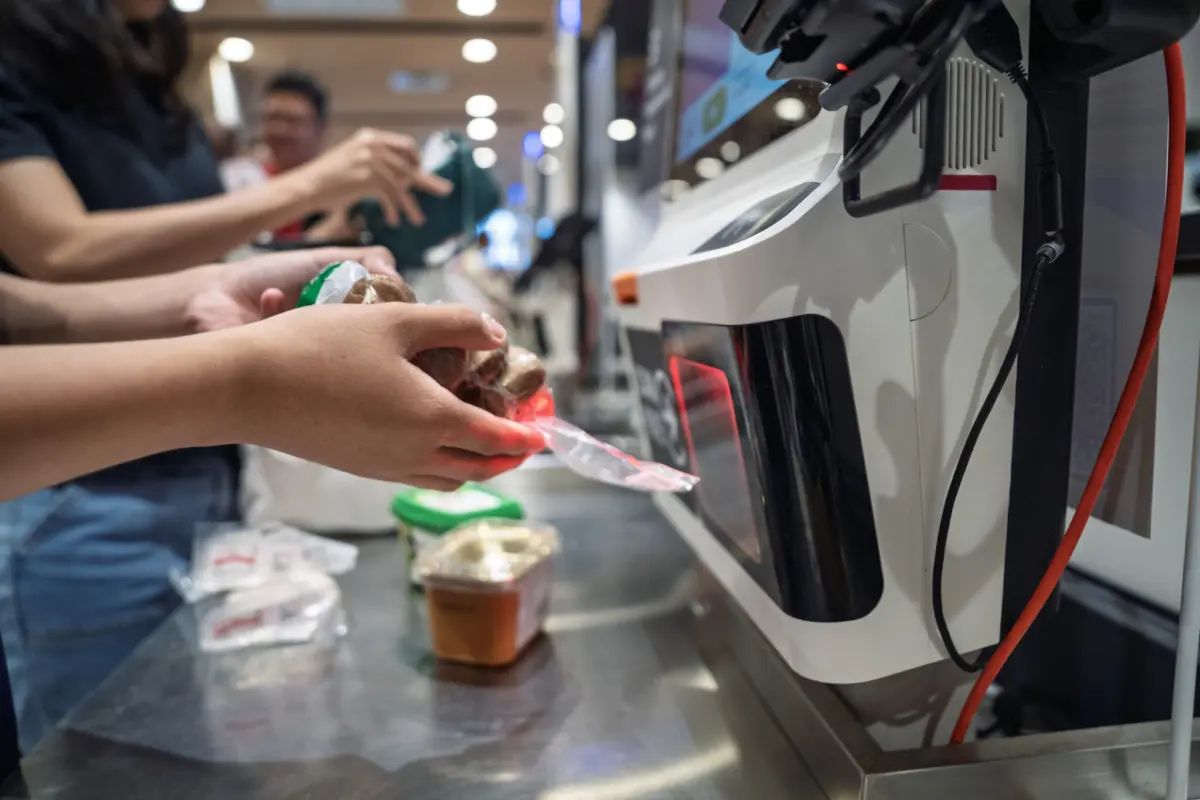
If you have ever stood impatiently at a grocery store kiosk, frantically scanning items while waiting for an error message to clear and wondering why you are suddenly performing unpaid labor, you are far from alone. Shoppers across the country have long harbored deep frustrations with the automated checkout experience, and it turns out that major retailers are finally starting to feel the exact same way. After decades of heavy investment aimed at cutting labor overhead and accelerating customer throughput, the retail industry is quietly stepping away from the self-service model that promised to revolutionize the modern shopping trip.
The shifting sentiment within the corporate offices of major retail chains is clearly reflected in the data. According to this year’s Voice of the Retail Industry Survey, which polled 340 retail executives, only 36 percent of companies plan to make future investments in self-checkout technology. That figure represents a notable seven-point drop from the previous year, highlighting a sharp cooling of enthusiasm across the sector. Among all the emerging technological tools and innovations evaluated in the survey, self-checkout emerged as the least popular option and stood out as the only major retail technology actively losing momentum in the current marketplace.
For years, consumers were sold a vision of frictionless, hyper-efficient retail environments where lines would vanish and transactions would be completed in seconds. Yet, the underlying premise of self-checkout has long been plagued by operational realities. As early as the late 1980s, industry insiders understood the limitations of the technology. A Kroger executive openly admitted decades ago that having customers scan their own merchandise actually takes significantly longer than letting a trained, professional cashier handle the process.
The perception of speed is largely an illusion generated by the consumer’s active participation in the task. Because shoppers are physically handling the items, scanning barcodes, and bagging goods themselves, the time spent feels shorter than it actually is. In reality, everyday consumers scan items at a much slower pace than seasoned store employees and are statistically far more likely to make scanning mistakes or encounter system errors. A comprehensive industry survey conducted in 2021 revealed that more than two-thirds of all shoppers have experienced frustrating snags, unexpected machine freezes, or persistent weight-discrepancy alerts while trying to complete a routine transaction.
Compounding these operational inefficiencies is the massive financial headache of shrink—retail industry parlance for inventory loss stemming from theft, administrative errors, and vendor fraud. Self-checkout lanes have notoriously become hotspots for both accidental omissions and deliberate shoplifting. Whether shoppers inadvertently fail to scan a bulky item sitting at the bottom of the shopping cart or intentionally bypass the barcode scanner altogether, the lack of human oversight has cost retailers billions of dollars in lost merchandise over the years.
Faced with mounting inventory losses, persistent customer dissatisfaction, and lower-than-expected efficiency gains, major retail brands are aggressively walking back their reliance on automated kiosks and pivoting back toward traditional, staffed checkout lanes. The industry-wide reversal is already reshaping the layout and daily operations of some of the world’s largest retail chains.
Walmart, Costco, and Kroger—industry giants that helped pioneer the widespread adoption of self-service technology—have all begun modifying their front-end strategies by stationing additional staff members directly inside self-checkout areas to monitor transactions and assist frustrated customers. Other major players have taken even more drastic measures to curb the chaos of completely unsupervised checkout zones.
Discount retail powerhouse Dollar General made headlines by pulling self-checkout kiosks entirely out of roughly 12,000 of its stores in an aggressive bid to prioritize customer service and reduce shrink. Meanwhile, retail heavyweight Target placed strict operational caps on its self-checkout areas, limiting the express lanes to transactions involving ten items or fewer in order to redirect shoppers with larger baskets back to traditional cashier-assisted checkout lanes.
The retreat from automation extends even further into the tech sector, where experimental concepts have faced high-profile setbacks. Amazon famously abandoned its much-touted cashierless "Just Walk Out" grocery store format after widespread reports revealed that the high-tech infrastructure was heavily reliant on a massive workforce of human operators based overseas in India who were reviewing video feeds and manually processing transactions remotely, undermining the core promise of autonomous, AI-driven retail efficiency.
As retailers continue to digest the findings of the latest industry surveys and count the costs of years of heavy automation, the pendulum is swinging firmly back toward human interaction. The grand experiment of removing the cashier from the retail equation has run into the hard realities of human error, consumer frustration, and inventory loss, signaling to shoppers everywhere that traditional customer service may finally be making a welcome return to the local storefront.









No comments yet. Be the first to join the conversation!