
When Disney invokes the word “magic” to describe its sprawling global empire, it is easy to dismiss it as corporate branding. The term functions as a convenient shorthand, making the complex reality of managing one of the largest entertainment and hospitality companies on Earth sound effortless, as though the entire operation runs on little more than pixie dust and good intentions.
In truth, maintaining that level of consistency across theme parks, resorts, and cruise lines requires intense operational rigor, rigorous training, carefully cultivated company culture, and extensive room for trial and error.
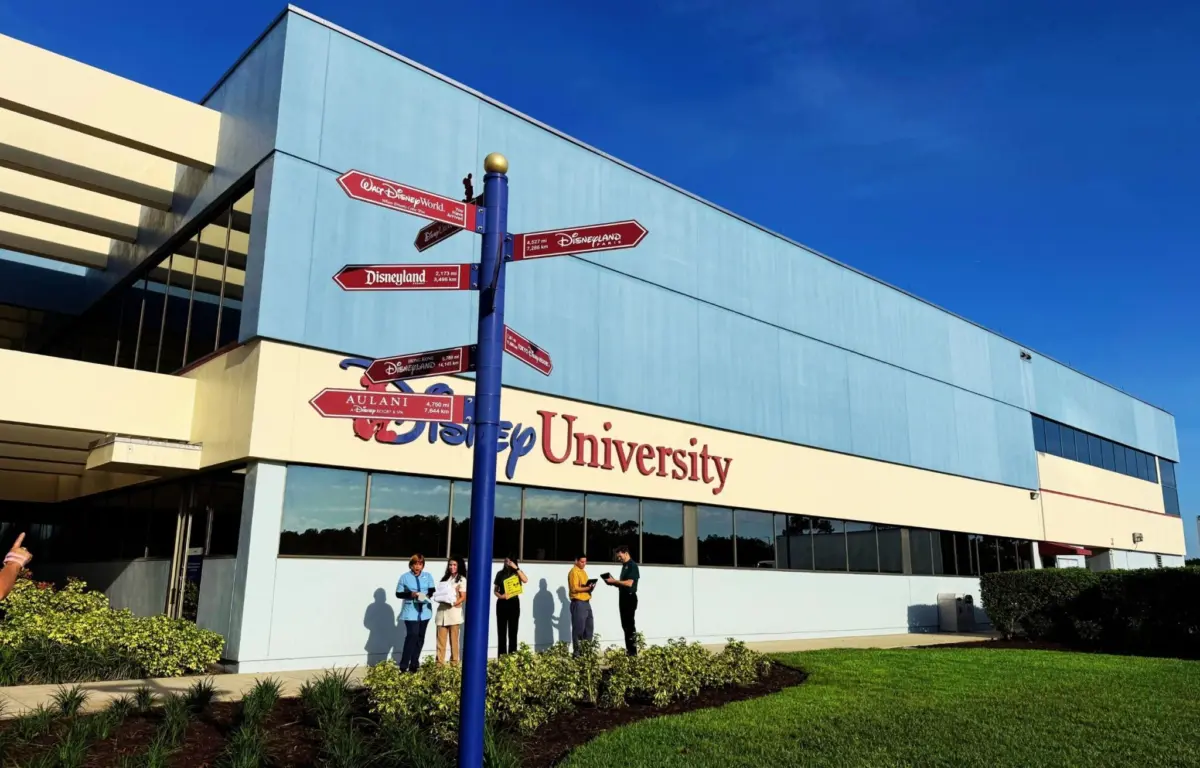
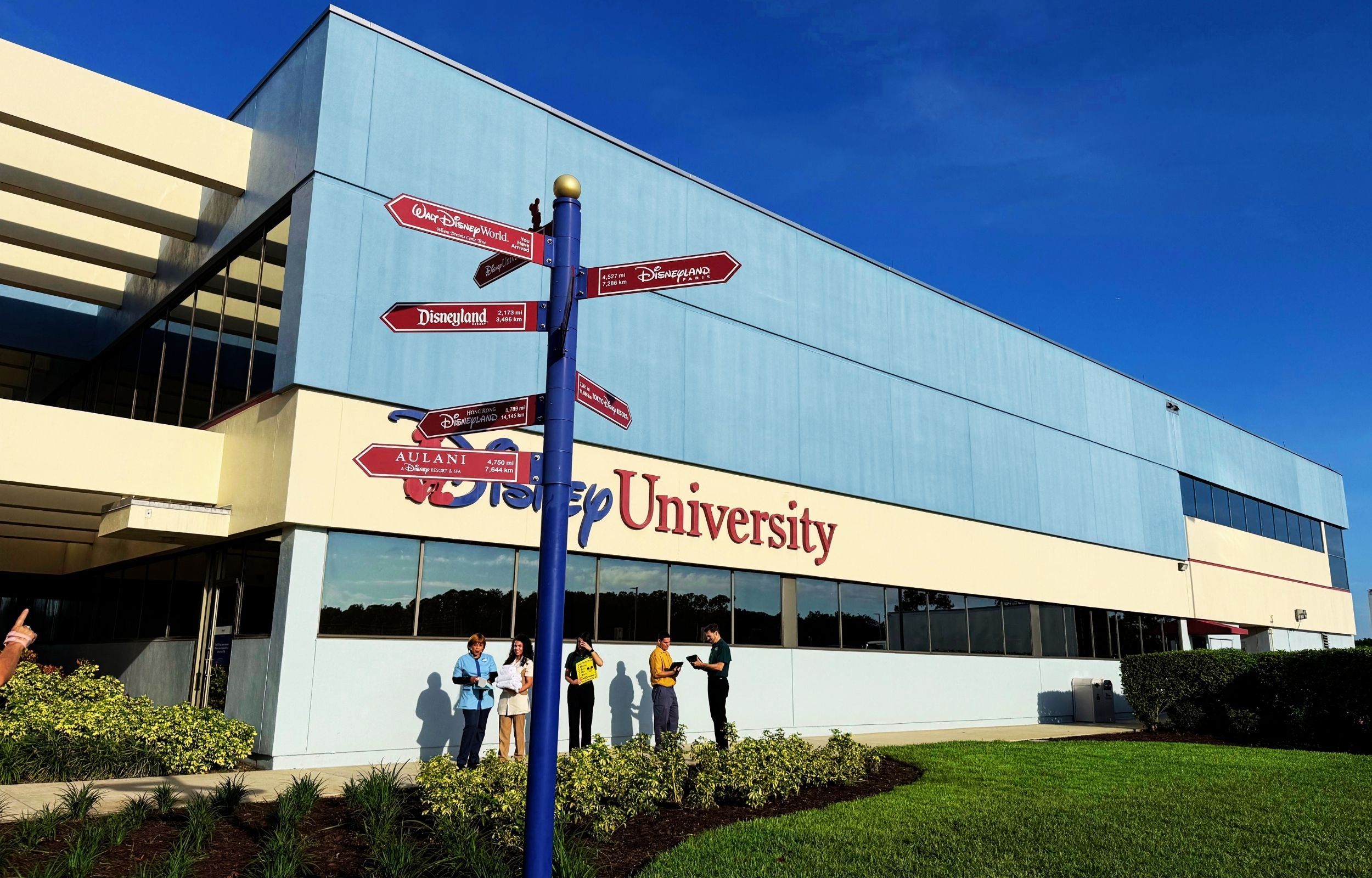
A behind-the-scenes look inside “Disney University” in Florida reveals how the organization prepares its workforce—known internally as “cast members”—for everything from meticulous housekeeping to managing massive, multi-faceted logistical operations. While Disney operates at a scale that few businesses in the world can ever hope to match, the underlying philosophies driving its training methods are surprisingly straightforward, offering practical insights for entrepreneurs navigating their own growth challenges.
Go Full Nathan Fielder: Rehearsing for Reality
One of the more unexpected sights tucked away inside Disney University feels reminiscent of an experiment staged on a comedy program like Nathan Fielder’s HBO series The Rehearsal.
Hidden within the facility are hyper-realistic mock environments, including fully constructed hotel rooms and staged lobbies. Here, housekeepers practice the physical mechanics of resetting rooms and sanitizing bathrooms, while front-desk staff role-play high-pressure check-in procedures and concierge demands.
The underlying principle mirrors the television show’s premise: repeatedly rehearsing a task in a realistic, low-stakes setting allows workers to iron out operational bugs before stepping onto the live stage. Human beings inevitably make mistakes when learning new skills. These simulated environments ensure that those initial, clumsy errors occur entirely out of sight of paying customers.
For smaller businesses, the operational takeaway is clear: companies should avoid letting promising employees flame out simply because their very first attempt happens live in front of a client. While certain individuals thrive in immediate sink-or-swim environments, a vast majority of talented workers benefit immensely from having a safe space to practice, make mistakes, and build confidence. Everyone improves through error, but the key is establishing a buffer that prevents those mistakes from alienating customers.
Don’t Confuse the Task With the Job
The foundational cornerstone of Disney University is “Traditions,” an extensive orientation seminar that introduces new hires to the company’s history and the core principles they are expected to embody in their day-to-day roles.
While it would be easy to view such a seminar as merely an exercise in corporate culture building, it serves a deeply practical function: establishing how an enormous workforce spread across wildly divergent jobs can arrive at reasonably consistent decisions. Traditions works to establish a shared overarching goal. The objective is not simply to have employees memorize a corporate mission statement, but to give thousands of workers a common answer to a fundamental question about what they are ultimately trying to accomplish.
This matters because no job description can ever anticipate every unpredictable variable. No manual can fully cover every dropped ice cream cone, every crying child, every sudden food allergy, every unscheduled ride closure, or every complex guest request. Eventually, an employee must make a judgment call. A clearly understood, shared goal provides the framework for making that call correctly.
Throughout the Traditions program, new hires are repeatedly told that every cast member’s primary job is to personally “create happiness.” While the phrasing is distinctly suited to the entertainment giant, the underlying philosophy translates across industries: the true objective of a role must extend beyond the narrow boundaries of a job description.
A parking attendant is often among the first representatives a guest encounters, and their demeanor instantly sets the tone for the day. Custodial cast members are ostensibly hired to clean the parks, but they routinely function as wayfinders, offering precise directions to ride entrances and restrooms. Every individual role has a specific technical function, but that function exists in service of a much larger mission.
At Disney, this distinction carries immense weight because visitors frequently spend months planning and thousands of dollars executing their vacations. A single dismissive interaction or an indifferent shrug can disproportionately damage the experience.
The same dynamic applies to smaller enterprises, where critical functions frequently slip into the operational cracks between distinct job descriptions. When an employee notices a software bug, declaring "I’m not an engineer" should not mark the end of the issue; they should know precisely where the feedback belongs. Conversely, if an engineer answers an inquiry from a prospective client, dismissing the call with "I’m not in sales" should not result in the lead vanishing into a voicemail abyss. Employees do not need to do everyone else’s job, but they must understand enough about the broader organizational goal to route issues toward the right hands. The objective is ensuring that vital matters do not die in the space between individual job titles.
Go Extreme With Your Dogfood
The sheer scale of Disney’s behind-the-scenes infrastructure is staggering. The company’s on-site costuming operation alone manages 46 separate costuming locations, employs 1,500 costuming cast members, oversees more than 900 unique costume designs, catalogs 746 distinct styles of hats, and keeps approximately 2.5 million garments in active circulation.
From parking attendants to characters in heavy performance gear, nearly everything worn within view of the public passes through this department. As an enterprise grows to accommodate a vast variety of roles, maintaining quality of life and functionality without sacrificing scale becomes a major operational hurdle.
For Disney’s costume division, the solution relies heavily on two foundational concepts: using your own product and actively listening to the people who rely on it daily. While “dogfooding” has long been a staple of startup culture, simply using an item internally often fails to reveal its flaws. A more effective approach involves deliberately using the product under the harshest conditions where failure is most likely to occur.
For Disney costume designers, this means spending hours out in the parks wearing their own creations amidst Florida’s grueling heat and humidity. Those extreme environments expose design flaws that would never become apparent inside a climate-controlled studio.
The parallel holds true for other industries: luggage manufacturers should drag their own suitcases through crowded airports when running late; software developers should test applications on outdated mobile devices with poor network reception; subscription businesses should regularly attempt to cancel their own services.
Designers can only experience so much firsthand, however. Disney supplements this by creating frequent opportunities for cast members to offer detailed feedback on the uniforms they wear daily, surfacing minor annoyances and edge cases.
Bianca Cross, manager of costume design and development, points to the custodial uniform as a prime example of this feedback loop in action. Crafted from a four-way stretch, breathable fabric, the garments can be worn tucked or untucked, and feature adjustable pant cuffs designed for wet environments. Those specific features emerged directly from listening to the workers performing the labor and iterating on their solutions.
This approach transforms the people living with the product into active participants in the design process. While many companies claim to listen to their users, the more critical test is whether they have made it genuinely easy for those users to talk back, proactively checking in and catching frustrations before they lead to churn.
Look Sideways for Talent
Disney operates effectively as dozens of distinct businesses housed under a single corporate umbrella—spanning hotels, complex transportation systems, restaurants, costuming, engineering, and logistics. This diversity creates unique career trajectories that would be virtually impossible to predict based on an employee’s initial hiring role.
Ivan Diaz, currently serving as the director of transportation services, initially began his tenure at the company in a technical role before receiving an unexpected inquiry. Leadership asked whether he had ever considered running a large organization, leading him to transition into managing one of the most complex transportation networks in the country.
The lesson for smaller companies is straightforward: management should never assume an employee’s current job title defines the limits of their capabilities. Often, the ideal candidate for an open position is already working within the organization—simply in a department leadership may not have initially thought to examine.









No comments yet. Be the first to join the conversation!