
Following a major legislative victory for the manufactured housing industry this summer, federal regulators have officially taken their first substantial step toward reshaping the future of factory-built homes in America.
In July, the manufactured housing sector secured a landmark policy win with the passage of the 21st Century ROAD to Housing Act, legislation that notably authorized the removal of the permanent chassis requirement for manufactured homes. Industry leaders have long argued that this rigid, decades-old requirement held back factory-built housing, keeping it pigeonholed in traditional rural and suburban plots. By eliminating the necessity of a permanent steel frame beneath every home, advocates believe the industry can finally gain greater acceptance in higher-density suburban, urban, and infill markets, while dramatically enhancing the structural capabilities needed to construct multi-story residences.
However, industry executives and policy experts have consistently acknowledged that realizing these sweeping benefits will take time. Before manufacturers can officially begin engineering, marketing, and selling homes without a permanent chassis, the U.S. Department of Housing and Urban Development (HUD) must first implement critical changes to modernize the federal manufactured housing code.
That crucial implementation process officially got underway this week. On Wednesday, HUD released its long-awaited "Next Generation Manufactured Housing Action Plan," providing the industry with its very first formal indication of how the federal agency plans to roll out the mandates established by the new legislation.
HUD Outlines Seven-Step Plan to Modernize Housing Standards
HUD’s newly published action plan details seven distinct actions designed to modernize and improve the overarching manufactured housing code, ensuring that federal regulations align seamlessly with the guidelines and objectives established under the 21st Century ROAD to Housing Act. While the federal agency has not yet provided a definitive timeline for when the comprehensive implementation process will conclude, the release of the blueprint confirms that the complex administrative and regulatory work has officially begun.
"The overarching goal is straightforward: preserve the strengths of the federal manufactured housing system while ensuring that it can support innovation and the next generation of factory-built housing," the agency stated in the official document.
The first major component of the strategy focuses on energy efficiency. HUD will initiate formal rulemaking procedures to update energy efficiency standards for manufactured housing under 24 CFR Part 3280, directly fulfilling the statutory requirements mandated by the 21st Century ROAD to Housing Act.
Moving directly into structural modifications, the second action addresses the most significant pillar of the recent legislation: chassis-free construction. HUD will revise the Manufactured Home Construction and Safety Standards to accommodate homes built without a permanent chassis. This sweeping regulatory update will encompass technical requirements for structural design, safe transportation, lifting procedures, and connection points. The ultimate objective is to establish a clear, comprehensive regulatory framework that accommodates both traditional homes built with a permanent chassis and innovative new designs that operate without one, granting manufacturers unprecedented flexibility.
Hand in hand with chassis-free structural updates, the third action targets foundations and installation protocols. HUD will update the Model Manufactured Home Installation Standards under 24 CFR Part 3285 to address how chassis-free homes are safely supported and securely anchored to the ground. To accomplish this, HUD’s Manufactured Housing Consensus Committee will draft and recommend targeted changes regarding foundations, anchoring systems, structural connections, setting procedures, and other vital installation requirements. This modernization is intended to permit a diverse range of innovative support systems and novel architectural designs while strictly maintaining safe and reliable structural performance.
The fourth element of HUD’s blueprint establishes a dedicated multi-module construction pathway. The agency plans to create more flexible regulatory pathways specifically tailored for situations where a residential structure is fabricated in multiple factory-made sections. With the mandatory chassis requirement now removed, HUD will explore how these transportable modular sections can be designed, shipped, assembled, and finished on-site while preserving a high degree of factory completion. The end goal of this pathway is to significantly expand the sheer range of housing types and aesthetic designs that off-site manufacturers can successfully deliver to the consumer market.
Expanding beyond single-family and small residential applications, the fifth action addresses larger structures by developing a performance-based code for residential buildings containing five or more units. HUD intends to fashion a performance-based federal construction and safety code—modeled after Part 3280—specifically for multifamily structures. The agency noted that larger, multi-unit buildings introduce complex architectural and engineering issues, such as shared common corridors, interior stairs, accessibility requirements, stringent fire separation, shared mechanical systems, and comprehensive egress, which are not fully addressed under existing manufactured housing standards. Establishing a performance-based code for these larger buildings will create a national pathway for repeatable multifamily construction operating entirely within a federal framework.
As part of this ongoing multifamily initiative, HUD previously selected the National Institute of Building Sciences to support programs aimed at expanding the adoption of factory-built construction methods for multifamily housing. This initiative directly follows previous updates made by HUD in 2024 that relaxed standards to allow the construction of duplexes, triplexes, and quadplexes.
The sixth step outlined in the plan involves the development of chassis-free case studies and the widespread dissemination of lessons learned. HUD plans to document early pilot projects that utilize chassis-free manufactured homes and share its empirical findings with the general public. These comprehensive case studies will examine design, transport logistics, foundation engineering, installation methodologies, municipal zoning, home appraisals, mortgage lending, insurance underwriting, and consumer market acceptance. The overarching aim is to help industry stakeholders, local officials, and financial institutions understand how chassis-free manufactured housing actually operates in the real world.
Finally, the seventh action focuses on creating a streamlined manufacturer on-ramp into the HUD regulatory system. HUD will develop targeted guidance and accessible resources designed to help existing modular builders and alternative off-site construction manufacturers transition into the federal HUD regulatory fold. This institutional support will cover critical areas such as factory certification protocols, design approvals, quality assurance and control systems, state and third-party inspection procedures, certification labeling, and complex installation requirements. The stated objective is to successfully lower historical barriers to entry and make it considerably easier for diverse factory-built product manufacturers to produce HUD-regulated housing units.
Looking Ahead: Industry Preparation and Long-Term Market Impact
Even as federal regulators embark on the complex rulemaking process, industry leaders emphasize that significant work remains ahead. In a July interview with HousingWire TBD, Lesli Gooch, CEO of the Manufactured Housing Institute, pointed out that the release of HUD’s action plan is merely the foundation for a transition that will unfold over the coming years.
Once HUD formally completes the extensive implementation process and finalizes its updated rules, individual manufacturers will be required to submit their innovative, chassis-free home designs to HUD-approved third-party inspection agencies for rigorous review and approval. Only after securing these approvals will manufacturers be legally authorized to bring homes without a permanent chassis to the open market.
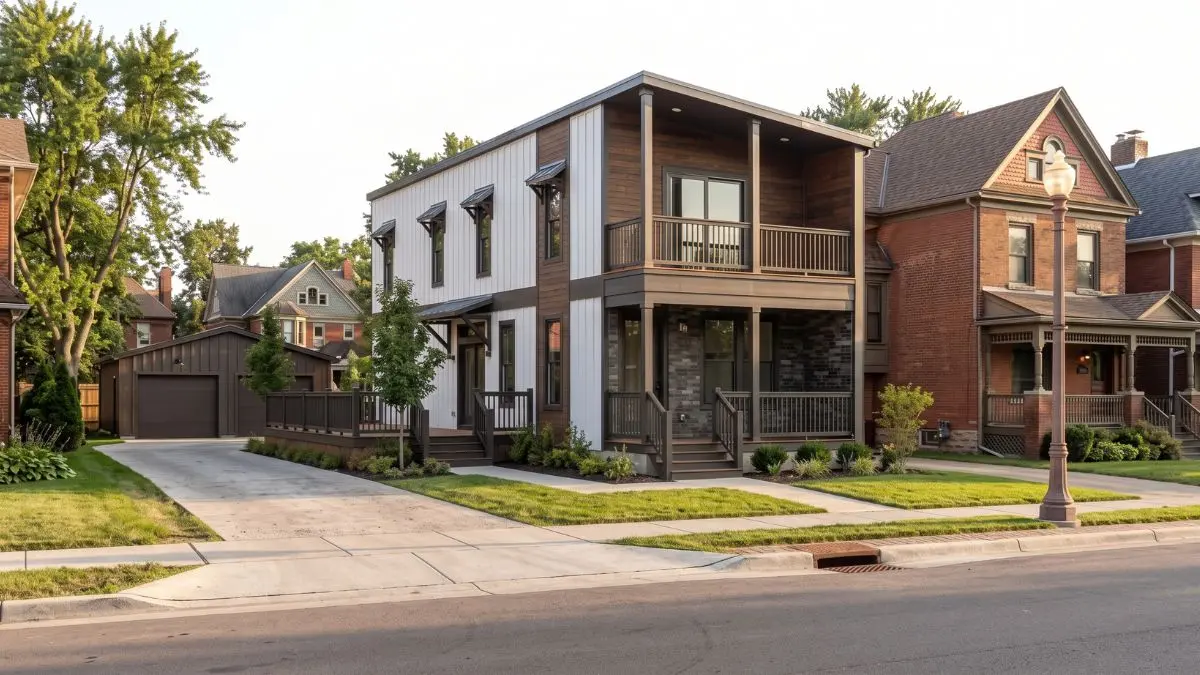
Despite the regulatory runway ahead, major industry players are already proactively preparing for the historic shift. During the Innovative Housing Showcase held in Washington, D.C., in the latter half of September, industry leader Champion Homes proudly unveiled a pair of brand-new, chassis-free, two-story home models explicitly designed to target growing urban infill housing developments. At the same time, Cavco Industries made waves by debuting the Grande Arbor—its very first manufactured home model built entirely without a traditional permanent steel chassis frame—at the national showcase event.
However, industry executives urge patience regarding how quickly these innovative products will translate into measurable sales volume. Speaking during a Q1 earnings call on July 31, Cavco Industries CEO William Boor confirmed that there is currently no set timeline for when chassis-free models will officially hit retail sales lots.
"We’re not sitting on this end, sitting here doing projections about how much incremental volume this stuff will add over what time period, but directionally, I know it’s going to be helpful," Boor told analysts during the call, emphasizing that "the benefits of this law will show themselves over time."










No comments yet. Be the first to join the conversation!