
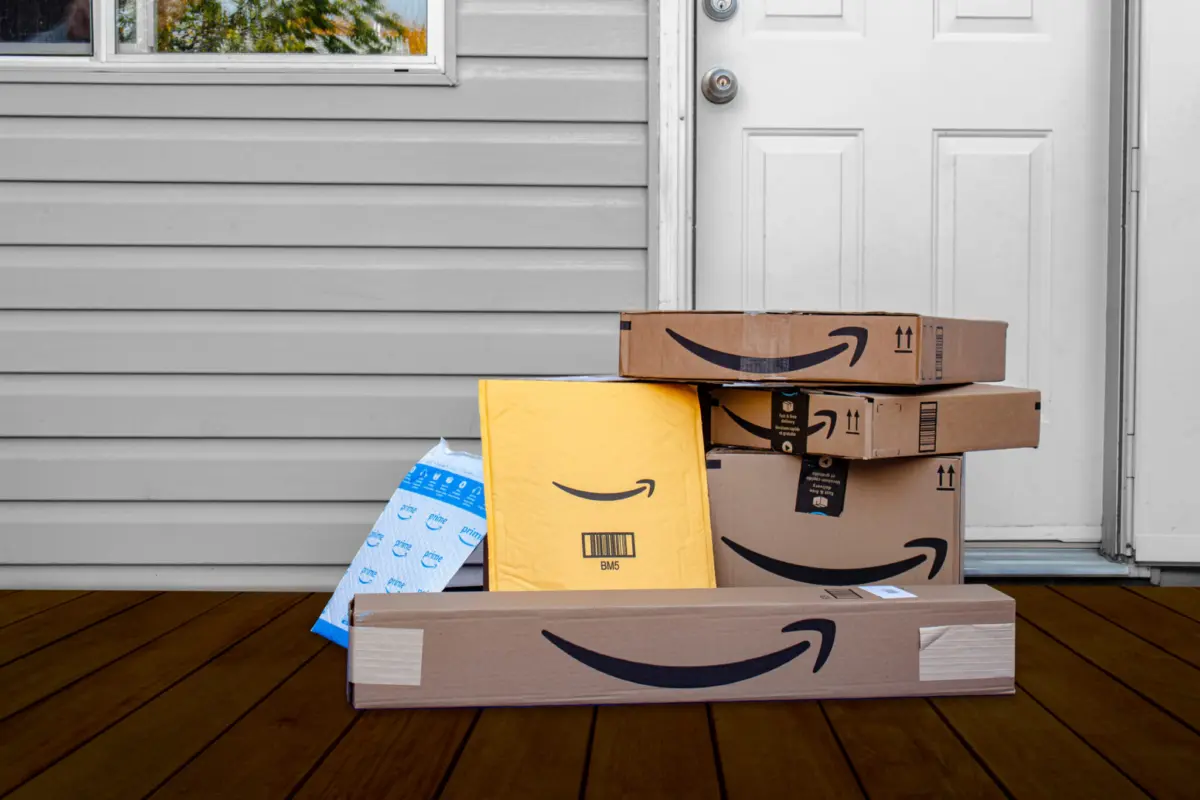
Amazon’s Prime Big Deal Days returned for another successful two-day run on Oct. 6 and 7, generating a significant surge in consumer spending across the United States. Fresh data published by Adobe reveals that American shoppers spent more during the October 2026 event compared to the previous year’s iteration, which took place on Oct. 7 and 8.
The two-day sales event, which fell on a Tuesday and Wednesday in both years, saw online shoppers spend $9.86 billion at U.S. retailers in its latest iteration, according to Adobe analysts. Adobe’s data is rooted in comprehensive tracking of direct online transactions, encompassing more than 1 trillion visits to U.S. retail sites, 100 million stock-keeping units (SKUs), and 18 distinct product categories.
The broader retail ecosystem continues to rely heavily on advanced analytics to measure these massive shopping spikes. More than 200 of the Top 2000 largest online retailers utilized Adobe for web analytics in 2025, combining for more than $836 billion in overall ecommerce sales that year. Amazon itself maintains a commanding market presence, ranking No. 1 in Digital Commerce 360’s Top 2000 Database, which tracks the largest North American online retailers by their annual ecommerce sales. Additionally, Amazon holds the No. 3 spot in Digital Commerce 360’s Global Online Marketplaces Database, a directory that ranks the 100 largest marketplaces worldwide based on third-party gross merchandise value.
How much did consumers spend during Amazon Prime Big Deal Days in October?
The financial momentum of the fall shopping season accelerated visibly in 2026. Online sales at U.S. retailers increased by 8.5% year over year while Amazon Prime Big Deal Days was actively underway. As the total expenditure climbed to $9.86 billion, the rate of increase also expanded compared to 2025, when sales grew by 7.3% to reach $9.09 billion.
Industry analysts at Adobe view this robust consumer activity as a clear signal that retailers will likely lean into earlier pre-holiday promotions than they would traditionally hold, attempting to capture consumer wallet share ahead of the traditional Black Friday and Cyber Monday rushes.
The pull of these early promotions was driven by aggressive discounting. Discounts reached a peak of 20% off the listed price, according to Adobe’s tracking. As these price cuts deepened, the most substantial discounts were concentrated in high-demand merchandise categories, including computers, televisions, electronics, toys, and apparel.
Across these core segments, certain categories experienced extraordinary spikes in consumer demand. Electronics sales surged by 85% compared to average sales levels recorded in September 2026. Toy sales saw an even steeper incline, jumping by 158%, while video game sales climbed 90%. Meanwhile, personal care products experienced a 73% increase from September baselines.
Looking closer at the electronics sector, specialized product lines saw unprecedented growth. Sales of headphones and speakers skyrocketed by 300% from September levels. Smartwatches followed closely with a 255% increase, camera sales grew by 135%, and smartphone purchases rose by 130%. Beyond traditional tech and toys, seasonal retail trends also played a major role. Ahead of Halloween, costume sales increased by a dramatic 610%, while candy sales grew by 180% over the course of the two-day event, Adobe reported.
How shoppers made purchases during Prime Big Deal Days in October
The mechanics of how consumers pay for their online purchases continue to evolve, with mobile commerce capturing a dominant share of the market. Adobe tracked how online shoppers executed transactions over the two-day sales period, noting that purchases made on mobile devices accounted for 52.0% of all online sales. This translated to roughly $5.1 billion in mobile spending, representing a 12.8% increase year over year.
Alternative payment methods also played a critical role in facilitating consumer purchases. Buy now, pay later (BNPL) services saw heavy utilization throughout the event. Adobe credited BNPL with enabling 6.0% of all online orders over the two days, giving these flexible financing options a direct hand in generating $692.3 million in sales. That total marked a 4.0% increase from the performance of October’s Prime event in 2025.
As retailers and financial technology providers look toward the remainder of the holiday shopping season, expectations for alternative financing remain high. Adobe projects that buy now, pay later services will drive more than $1 billion in consumer spending on Cyber Monday alone, which falls on Nov. 30 in 2026, underscoring how payment flexibility has become a cornerstone of modern digital retail events.










No comments yet. Be the first to join the conversation!