
Criminal Justice
October 9, 2026, 9:34 am CDT
An Alaska man who flooded the U.S. Supreme Court’s public online portal with hundreds of violent, racist, and homophobic messages threatening to assault and murder several members of the high court has been sentenced to three years of supervised release, successfully avoiding prison time due to his advanced age, declining cognitive health, and severe medical conditions.
U.S. District Judge Aaron Peterson of the District of Alaska handed down the sentence on Wednesday at the federal courthouse in Anchorage, Alaska, concluding a high-profile federal case that drew widespread attention amid mounting security concerns for public officials and members of the judiciary across the United States.
The defendant, 78-year-old Panos Anastasiou of Alaska, stood before the federal judge earlier this year and formally pleaded guilty to multiple charges, including threatening to assault and murder several Supreme Court justices. In addition to those counts, Anastasiou also entered a guilty plea for possessing a firearm as a felon, a charge uncovered during the course of the federal investigation into his online threats.
Under the terms of the sentence negotiated as part of the legal proceedings, federal prosecutors agreed not to seek a term of imprisonment for Anastasiou. This decision was reached after careful consideration of a confluence of mitigating personal circumstances, most notably the defendant’s advanced age, his ongoing battle with throat cancer, and a diagnosis of dementia that has severely impacted his cognitive functions. Alongside the three-year term of supervised release, Anastasiou will serve a designated period of home confinement, ensuring that his movements are restricted while he receives necessary medical oversight outside of a traditional correctional facility.
Court documents and investigative findings revealed that the threats spanned a prolonged period between 2023 and 2024. During this timeframe, Anastasiou transmitted more than 500 hostile messages through the Supreme Court’s publicly accessible online communication portal. The digital barrage was characterized by extreme vitriol, featuring explicit racist and homophobic content directed broadly at the judiciary, alongside targeted, chilling declarations demanding the assassinations of key leaders on the nation’s highest court.
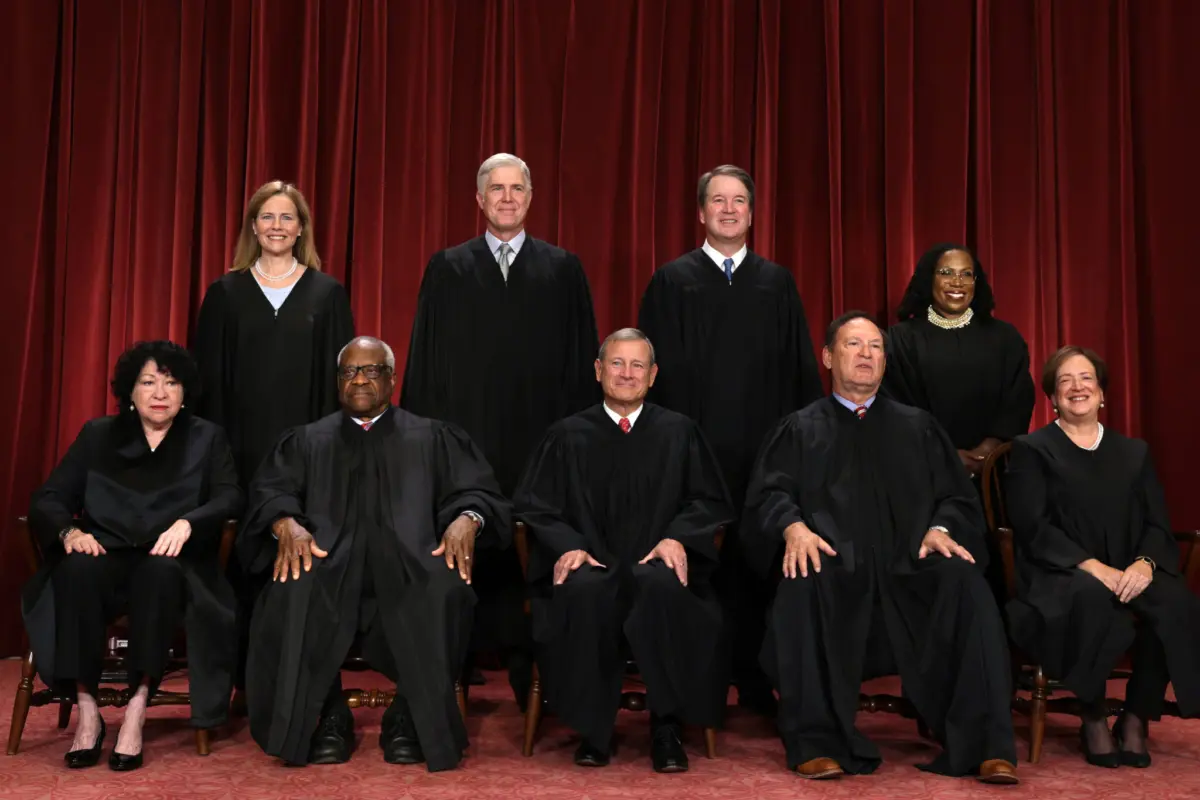
Specifically, according to details highlighted in a report by Bloomberg Law, Anastasiou’s communications explicitly called for the assassinations of Chief Justice John Roberts, Justice Clarence Thomas, and Justice Samuel Alito. The sheer volume of the transmissions, combined with the explicit and violent nature of the language used against protected public servants, triggered a comprehensive federal probe that ultimately led to his identification, arrest, and prosecution in the District of Alaska.
The resolution of the case in Anchorage highlights the complex intersection of federal security enforcement, judicial protection, and the legal system’s handling of aging defendants suffering from debilitating medical and mental health conditions. While federal guidelines and public safety imperatives typically mandate strict penalties for threats made against federal judges and Supreme Court justices, the judiciary occasionally weighs severe mitigating factors such as terminal or degenerative illnesses and profound cognitive decline when determining appropriate alternatives to incarceration, such as supervised release combined with home detention and restricted firearms access.
As the legal proceedings conclude with Judge Peterson’s Wednesday ruling, the case against Anastasiou closes a notable chapter in federal docket management regarding threats against the judiciary, leaving the elderly Alaska resident subject to strict federal monitoring under his newly imposed terms of supervised release and home confinement.











No comments yet. Be the first to join the conversation!